

Weekly Blog - 13 March 2023 - Military Spending
Military spending
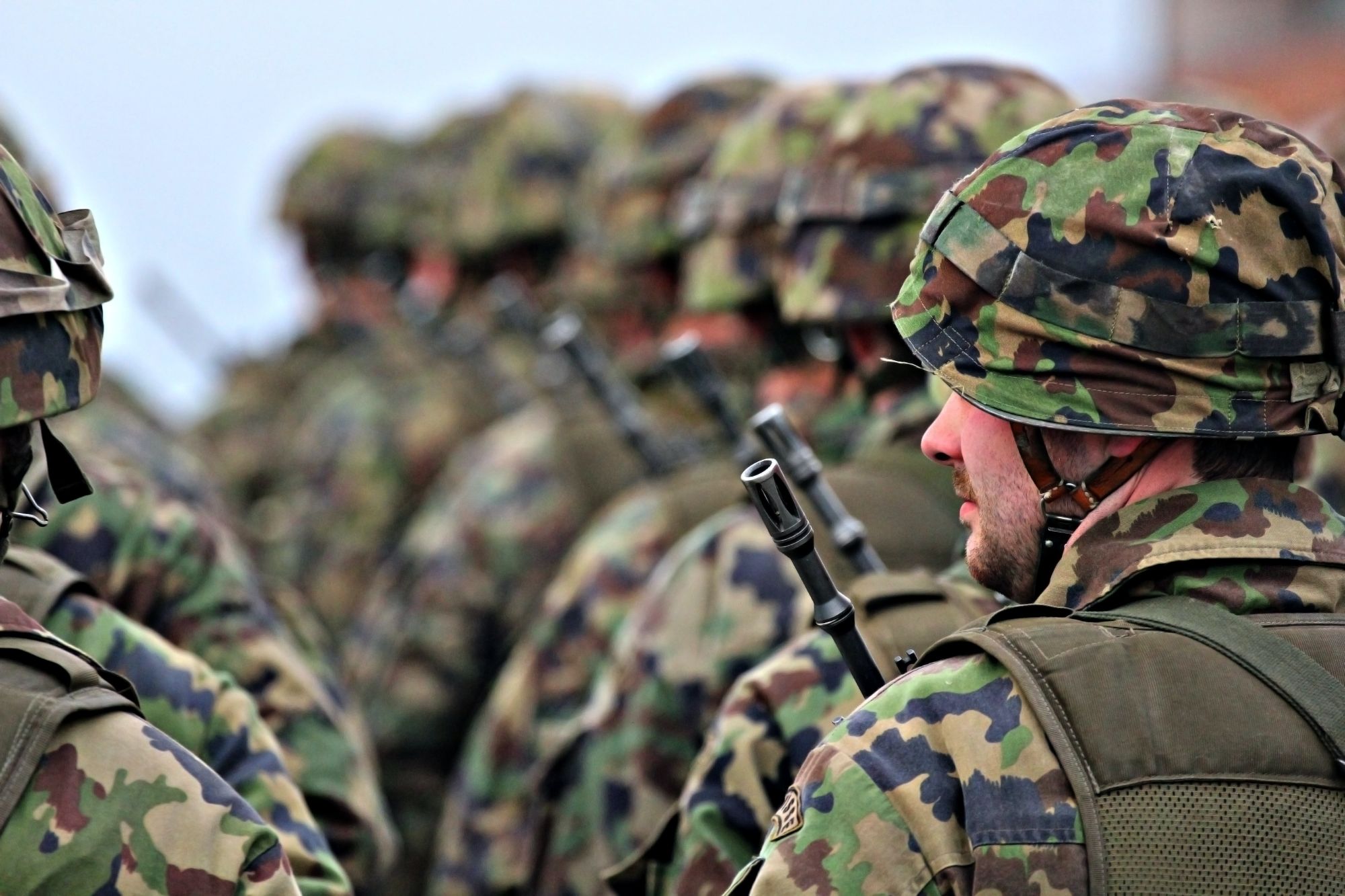
This week on Monday 13 March the UK government announced it is increasing its defence spending by £5 billion over the next two years. The UK spent 2.2% of Gross Domestic Product on military expenditure in 2021-22 and aims to scale this up to 2.5% over the next few years.[1] The question of military spending is a difficult one for Christians. Some believe there is never any justification for violence whatsoever and hence all military spending is wrong, others that in certain extreme circumstances violence may be necessary. All are united in believing every effort should be made to find alternatives and avoid the use for force. Each Christian must pray this through for themselves, and come to their own conclusion, whilst respecting others may come to different conclusions. This week Arise’s weekly blog explores one possible answer to this difficult area.
State use of force
The issue of state use of force is one of the areas explored in the Arise Manifesto report (Arise’s Christian vision for a better world). This report looks at what the Bible says, and what history teaches us, to guide us in what the church and the world should be doing in this and other areas. In the report we find that the Bible does teach that in fulfilling their duty to administer justice, national authorities are permitted to use limited force where necessary to protect innocent citizens and enforce the law (detain criminals etc.). We see this in the Old Testament, in the law and the teaching on the role of kings and national authorities, but also in the New Testament, where John the Baptist, Jesus and Peter all seem to accept, and not criticise, the role of soldiers and national authorities to enforce justice. Paul tells us, “rulers hold no terror for those who do right, but for those who do wrong. Do you want to be free from the fear of the one in authority? Then do what is right and you will be commended. For the one in authority is God’s servant for your good. But if you do wrong, be afraid, for rulers do not bear the sword for no reason. They are God’s servants, agents of wrath to bring punishment to the wrongdoer” (Roms 13: 3 – 4). The state is the only institution in the Bible that is permitted to use force in any way (certainly the church and us as individual Christians should never use it), and even here that force should be significantly limited (Arise Manifesto, pg 81 – 82).
Today, we talk about the state having a ‘monopoly of violence’, in Max Webber’s term, or as ‘Leviathan’, the same principle earlier described by Thomas Hobbes. The importance of this ancient Biblical teaching has been reaffirmed in modern times by scholars and political scientists. Thus, one of Steven Pinker’s central conclusions in The Better Angels of our Nature, a huge work charting the decline of violence in human history, is “A state that uses a monopoly on force to protect its citizens from one another may be the most consistent violence-reducer that we have encountered in this book … When bands, tribes and chiefdoms came under the control of the first states, the suppression of raiding and feuding reduced their rates of violent death fivefold … And when the fiefs of Europe coalesced into kingdoms and sovereign states, the consolidation of law enforcement eventually brought down the homicide rate another thirtyfold.” [2]
There are only three circumstances in which the Bible seems to justify the state using force, all of which are about protecting innocent civilians from those who would hurt them. The first of these is the limited and restrained use of force to detain criminals and enforce the law (Arise Manifesto, pg 81 – 82). The second is that when states do find themselves the victims of aggressive invasion by other nations, they can legitimately defend their citizens. We read how during the exodus “The Amalekites came and attacked the Israelites at Rephidim. Moses said to Joshua, ‘Choose some of our men and go out to fight the Amalekites’” (Ex 17: 8 – 9). Later the prophet Micah declared, “Marshal your troops now, city of troops, for a siege is laid against us. They will strike Israel’s ruler on the cheek with a rod” (Micah 5: 1) (Arise Manifesto, pg 89). The third area where states can legitimately use limited force is to intervene in other countries on occasions when the citizens of those nations are suffering extreme violence or genocide at the hands of their own governments. Thus, the prophet Isaiah declares “The vineyard of the LORD Almighty is the nation of Israel, and the people of Judah are the vines he delighted in. And He looked for justice, but saw bloodshed; for righteousness, but heard cries of distress. Woe to you who add house to house and join field to field till no space is left and you live alone in the land. The LORD Almighty has declared in my hearing: ‘Surely the great houses will become desolate, the fine mansions left without occupants’ … He lifts up a banner for the distant nations, he whistles for those at the ends of the earth. Here they come, swiftly and speedily! Not one of them grows tired or stumbles, not one slumbers or sleeps; not a belt is loosened at the waist, not a sandal strap is broken. Their arrows are sharp, all their bows are strung” (Isa 5: 7 – 28). Later the book of Lamentations looks back: “The kings of the earth did not believe, nor did any of the peoples of the world, that enemies and foes could enter the gates of Jerusalem. But it happened because of the sins of her prophets and the iniquities of her priests, who shed within her the blood of the righteous” (Lam 4: 12 – 13) (Arise Manifesto, pg 90 – 91).
In the modern world this ancient Biblical principle has been rediscovered and is captured in the terminology of the ‘Responsibility to Protect’, enshrined in the conclusions of the 2005 UN World Summit which declares, “The international community, through the United Nations, also has the responsibility to use appropriate diplomatic, humanitarian and other peaceful means, in accordance with Chapters VI and VIII of the Charter, to help to protect populations from genocide, war crimes, ethnic cleansing and crimes against humanity. In this context, we are prepared to take collective action, in a timely and decisive manner, through the Security Council, in accordance with the Charter, including Chapter VII, on a case-by-case basis and in cooperation with relevant regional organizations as appropriate, should peaceful means be inadequate and national authorities are manifestly failing to protect their populations from genocide, war crimes, ethnic cleansing and crimes against humanity.” [3] Of course the circumstances in which the international community can legitimately use armed intervention should rightly be very restrained. It should only be considered in contexts of extreme oppression and/or genocide; when all other options have been exhausted; solely to save life; with the agreement of the UN Security Council or all its democratic members; when there is a clear plan to rapidly transition power and leave again; when such an intervention is sufficiently funded; when it has a good prospect of success; and according to various other qualifiers (Arise Manifesto, pg 136 – 140).
So is increasing state military spending ever right?
So given these three scenarios where limited state use of force can be justified, there is an argument that at times it may be legitimate and necessary for states to increase their military spending. Not in order to create more conflict, but precisely the opposite, in order to deter and prevent it. All the data and evidence from history considered in the Arise Manifesto, indicates that the vast majority of suffering and death in conflict, occurs, not in the many relatively small, often internal, wars that take place around the world (as tragic as these certainly are), but in the few major international hot wars between powerful nations (Arise Manifesto, pg 96 – 99). Therefore it is incumbent on the governments of the world to do all they can not only to reduce and end ‘small’ conflicts, but to proactively work together to decrease tensions and prevent major international conflicts from breaking out. One policy which can help maintain stability is indeed for nations to maintain professional, well trained, equipped, and controlled armies. Such forces deter aggression from other nations, stand ready to protect their citizens if necessary, can participate in UN peacekeeping operations, are able to intervene if needed in contexts of extreme oppression and genocide, and can also be deployed to help with humanitarian needs and emergencies both at home and around the world.
However, just focusing on developing a strong, professional military alone, in the absence of other international policies, may well do more to raise rather than decrease tensions. It only makes sense as part of a wider package of other (even more important) measures to decrease tensions and prevent major international conflicts from breaking out. Firstly, and perhaps most importantly, states must pursue regular and cordial diplomatic communication, relations, dialogue and meetings (including at the highest levels), especially between powerful nations. No matter how difficult situations may become, it is critical that nations keep talking. It is hard to overemphasise the importance of this point. Nations can further foster stability by proactively supporting and constructively engaging with international institutions such as the United Nations (UN) and regional institutions like the Asia-Pacific Economic Cooperation (APEC) organisation. Such institutions are critical international stabilisation mechanisms. Another crucial area for fostering stable and peaceful international relations is for all nations to prevent the further development, and contain the spread, of nuclear, biological, chemical or other weapons of mass destruction. All nations should sign and ratify the Nuclear Non-Proliferation Treaty and the Biological and Chemical Weapons Conventions, and work towards safely reducing existing stockpiles. In a world where such horrors cannot be uninvented, unilateral disarmament by one side may not be the safest course. However, superpowers working together to safely reduce existing stockpiles through negotiated agreements with independent verification has proved to be effective. Nations should avoid acting in an arrogant, high-handed or triumphalist fashion, and should avoid putting other countries in a position where they feel humiliated. Such actions are likely to inflame resentment and tensions. Countries should watch out for significant tensions that are emerging between nations (especially powerful ones) and work proactively through peaceful and diplomatic means to de-escalate them before they become full-blown conflicts, as a matter of high priority. This often means finding the ‘off ramp’, a way that allows both sides to claim a win and de-escalate tensions, without either side losing face or appearing to have backed down. These and multiple other policies can play a crucial role in preventing major international conflicts emerging (Arise Manifesto, pg 124 – 129).
The issue of military spending will always be a contentious and debated one, especially for Christians. Each Christians must pray this through for themselves, and come to their own conclusion, whilst respecting others may come to different conclusions. There is at least an argument here though that state funding to maintain a professional, well trained, equipped, and controlled military, can be justified, and can even be a key instrument to protect the innocent; maintain law, order and justice; and deter, prevent and reduce conflict. But only if it is part of a wider package of even more important policies all aimed at decreasing tensions and preventing major international conflicts from breaking out.
Find out more
Find out more about steps to prevent, reduce and end conflicts in the Arise Manifesto. This report is Arise’s big picture, researched, Biblical, holistic and practical vision for a better world. It looks at what the Bible says, and what we can learn from the best data and the world’s leading experts on the five major areas of evangelism, discipleship, social justice, development and the environment. It then draws these lessons together into a practical road map for the changes we need to see in our world, which the Arise movement campaigns to achieve.
Found this blog online, or sent it by a friend? Sign up to receive weekly blogs from Arise directly.
[1] UK ramps up defense spending by $6 billion ahead of key AUKUS submarine announcement, CNN, (13 Mar 2023), https://edition.cnn.com/2023/03/13/europe/uk-defense-spending-aukus-intl-hnk/index.html
[2] Pinker, S., The Better Angels of our Nature, (2012), pp. 822 – 823, see also pp. 41 – 43, 51, 67, 89 – 90, 93, 145, 192 – 193, 283, 468 – 469, 649 – 652, 739, 824
[3] World Summit Conclusions, UN, (2005), p. 30, www.un.org/en/ga/search/view_doc.asp?symbol=A/RES/60/1