

Weekly Blog - 15 January 2024 - Taiwan
Taiwan tensions
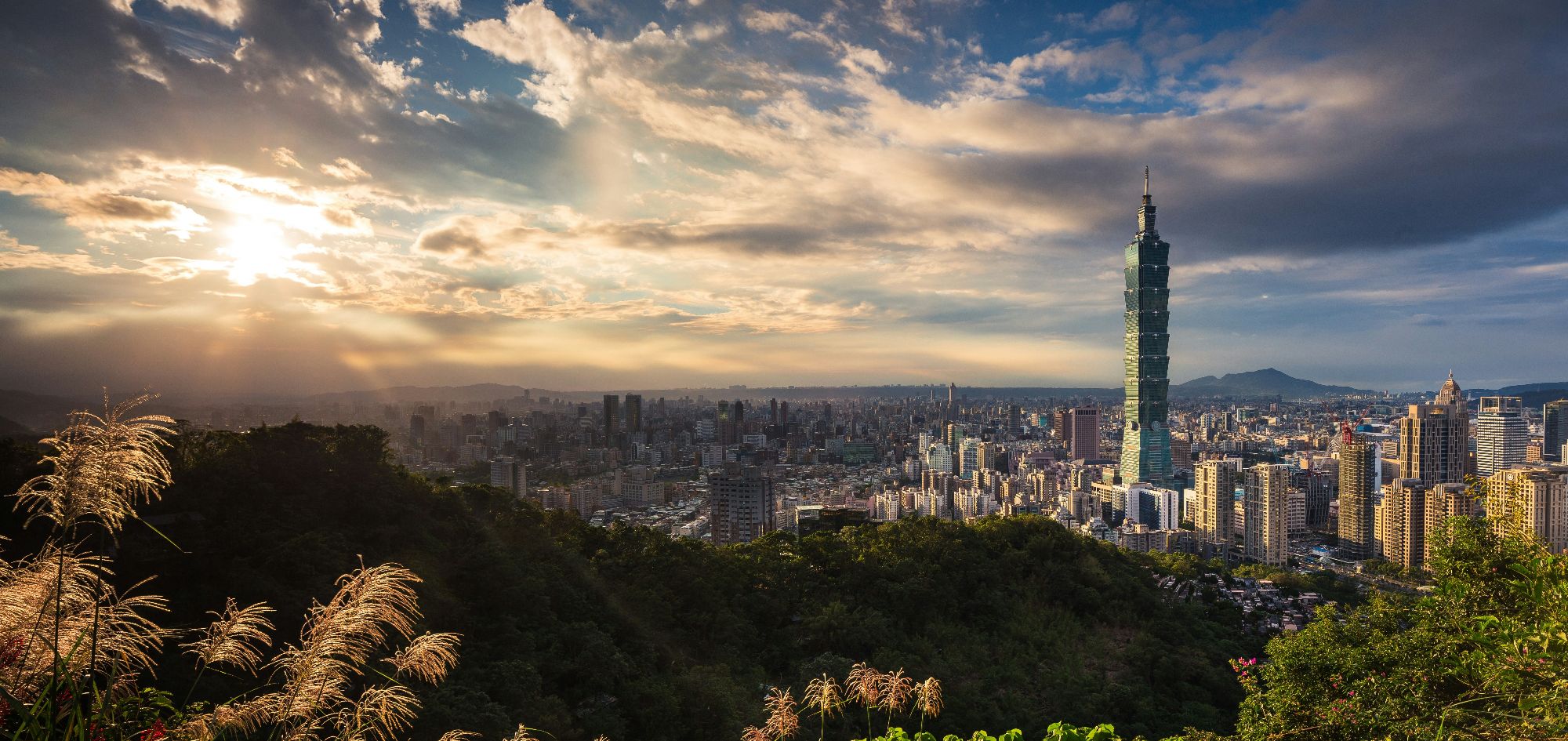
Taiwan went to the polls last Saturday 13 January. Lai Ching-te won an impressive third term for the governing Democratic Progressive Party (DPP). He will be inaugurated as President in May, taking over from the current leader Tsai Ing-wen. The success of the pro-independence DPP has angered China, although this has been moderated somewhat by the fact that the DPP has failed to win an overall majority in parliamentary seats, meaning governing will require a degree of agreement and consensus with other parties.
Relations between China and Taiwan have been tense ever since the end of the Chinese civil war in 1949 when the Chinese Communist Party took control of mainland China and Chiang Kai-Shek’s nationalist faction fled to Taiwan. In the years that followed Taiwan remained an autocratic regime until gradual reforms transitioned it to become fully democratic in the 1990s. Meanwhile, economic reforms and policies from the 1960s onwards led to Taiwan’s impressive economic take off from a small and poor island to one of the most dynamic and successful economies in the world. This was a major development success story, and a path that was later followed by China from the late 1970s. Tensions between China and Taiwan have waxed and waned over the decades as China’s power has grown and different more pro or anti Chinese factions have come to power in Taiwan. China has never accepted Taiwan as an independent nation and has repeatedly called for its full reintegration into China, not ruling out the use of military force to accomplish this. The vast majority of nations in the world do not recognise Taiwan, despite the fact that the self-governing region has in all effect acted as an independent nation for many years. In recent months Chinese threats have grown, possibly emboldened by the current seeming success of Russia’s attempt to invade and incorporate Ukraine, and the further distractions for western nations in Gaza and with Houthi rebels in the Red Sea. As well as stiffening rhetoric, China has also been conducting significant military exercises around Taiwan.
Is there a Christian response to tensions round Taiwan?
So, what is the right approach to de-escalating tensions around Taiwan? Is Taiwan an independent country or not? If not, is it right for China to use force if necessary to enforce unification? One of the things that a major report from Arise, the Arise Manifesto, looks at in detail is what works best to both maintain peace between nations, and ensure good governance and just regimes within them. It looks at what the Bible teaches us about these crucial areas, and also what lessons we can learn from what has worked best to achieve them in the past. Turning first to the issue of the use for force, the Bible is incredibly clear that God does not want to see aggressive wars of conquest, as the prophet Micah says, “He will judge between many peoples and will settle disputes for strong nations far and wide. They will beat their swords into plowshares and their spears into pruning hooks. Nation will not take up sword against nation, nor will they train for war anymore” (Micah 4: 3) (Arise Manifesto, pg 88 – 89). We also read in the Bible how God wants all governments, everywhere, to rule well, with justice, fairness, impartiality and integrity (Arise Manifesto, pg 79 – 85). As it says in the Book of Proverbs, “By justice a king gives a country stability” (Prov 29: 4). And we see how Israel’s great king David was praised for doing this, for “David reigned over all Israel, doing what was just and right for all his people” (2 Sam 8: 15). In our modern world, democracy has been one of the most effective ways of making sure this Biblical principle is put into practice. Democracies have a much better track record of governing well and effectively with justice, and good standards of human rights, civil liberties and basic freedoms than autocratic states do (Arise Manifesto, pg 102 – 108).
It therefore follows that whether Taiwan remains a part of China or becomes a fully independent nation should be a choice for the people of Taiwan, that should be respected by all. It also follows that it would be wrong for China to use military force to enforce that unification against the will of the Taiwanese people. For the international community then, these principles should be respected with great sensitivity. Nations should respect Taiwan’s current status as a self-governing part of China, and not recognise Taiwan as an independent nation unless and until its people are absolutely clear that they are ready to make that choice. Nations should also seek to do all they can to reduce tensions and apply diplomatic pressure to China not to take the military option.
What can be done to de-escalate tensions?
There are a number of important things that the Arise Manifesto finds that governments can do that are highly effective at de-escalating tensions and preventing wars from breaking out (Arise Manifesto, pg 124 – 129). Firstly, and perhaps most importantly, they should pursue regular and cordial diplomatic communication, relations, dialogue and meetings (including at the highest levels), with China. No matter how difficult situations may become, it is critical that nations keep talking. It is hard to overemphasise the importance of this point. Secondly, nations should work to continually build a broad consensus around shared values, especially between powerful nations, on what good governance, peaceful co-existence, democracy and human rights looks like. The lessons from history indicate that the world has greater stability when the most powerful nations hold a broadly similar common set of values. Of course there is much that the international community and China disagree over, particularly in these last two areas of human rights and democracy. Nevertheless, there are many areas where China and the wider international community agree. Both want to see a stable and peaceful, rules-based, world order, and a healthy and flourishing global economy. They also have a shared common interest in addressing global challenges like climate change, economic crises and Covid.
Thirdly, where there are aggressive moves made by China in terms of military operations and fly overs around Taiwan, the international community should not shy away from calling these out and reinforcing the importance of peace and democracy. However, fourthly, in order to strengthen these messages it is imperative that the international community also behaves in ways that are consistent with its own values. For example, the current relatively unequivocal support of Israel by western nations in the face of appalling violence in Gaza stands out as rank hypocrisy to the rest of the world. A much tougher stance with Israel must be taken too to ensure consistency. In general terms, the international community should avoid acting in an arrogant, high-handed or triumphalist fashion, and should avoid putting countries like China in a position where they feel humiliated. Such actions are likely to inflame resentment and tensions.
A fifth thing the international community should do is to work together to agree and communicate privately to China that a wide range of tough diplomatic policies and targeted sanctions will be applied if any invasion of Taiwan were to take place. Furthermore, in a world where the regimes of large and powerful autocratic nations like Russia and China do threaten to pursue aggressive agendas, it is important for the democracies of the world to maintain a well-funded, large and professional military for national defence and to help in armed intervention to prevent gross injustice. The existence of such forces and the clear determination to use them if necessary acts as a deterrent to potential aggressors and helps preserve the peace. A degree of subtlety and ambiguity about whether the international community would respond with force to an aggressive move around Taiwan is helpful. Such a possibility should be managed carefully to avoid inflaming tensions further or putting nations in positions where they can’t be seen to back down. Nevertheless, that unspoken threat of a wider international retaliation must be a factor that can weigh positively in the balance to help deter any aggressive moves.
Finally, and crucially, the international community should watch out for anything that may escalate tensions between China and Taiwan and work proactively through peaceful and diplomatic means to de-escalate them before they become problems, as a matter of high priority. This often means finding the ‘off ramp’, a way that allows both sides to claim a win and de-escalate tensions, without either side losing face or appearing to have backed down. The international community and appropriate international intuitions like the UN should engage in shuttle diplomacy and offer to facilitate and mediate talks between the governments of China and Taiwan to help defuse tensions and reach common agreements on a shared and mutually prosperous way forward.
Conclusion
The international community must give a high degree of priority to managing and de-escalating tensions between China and Taiwan. This requires great sensitivity and skill to ensure the feelings of both sides are understood and valued, open conflict is avoided, and the democratic will of the Taiwanese people is respected. The world is in a dangerous and unstable season with the conflicts in Ukraine and Gaza, and forthcoming elections in major nations like the US, creating deep and dangerous divisions in global geopolitics. A new flash point of tension around Taiwan would significantly destabilise the international order even further. There should be few higher priorities for the international community and diplomats around the world than seeking to prevent this from happening.
Find out more
Find out more about how God is at work in the world, and the role we all have to play in that work, in the Arise Manifesto. This report is Arise’s big picture, researched, Biblical, holistic and practical vision for a better world. It looks at what the Bible says, and what we can learn from the best data and the world’s leading experts on the five major areas of evangelism, discipleship, social justice, development and the environment. It then draws these lessons together into a practical road map for the changes we need to see in our world, which the Arise movement campaigns to achieve.
Found this blog online, or sent it by a friend? Sign up to receive weekly blogs from Arise directly.