

Weekly Blog - 25 November 2025 - What happened at COP?
Ten years since the Paris Agreement, 30 years since the first UN climate negotiations, Brazil have just hosted the latest, COP30, in Belém at the mouth of the Amazon River. A rainforest city named after Bethlehem made good symbolism, but COP30 only had limited successes. Ben Niblett picks through them.
Tough talks
Caring for creation, and tackling climate change and deforestation are major parts of our calling and mission as Christians, as set out in the Arise Manifesto, Arise’s vision for a better world. Arise members have been campaigning for progress at UN COP negotiations for several years, including most recently at this year’s COP. Now Arise’s Ben Niblett looks at what was achieved, and what wasn’t.
In summary there were good steps forward, but they were small, and it’s definitely time for big steps. Brazil’s President Lula raised hopes and rhetoric, and Brazil showed their good side as protector of the rainforest, home of indigenous peoples, clean energy user and collaborative leader of the global south, not their ugly side as a major oil and beef producer.
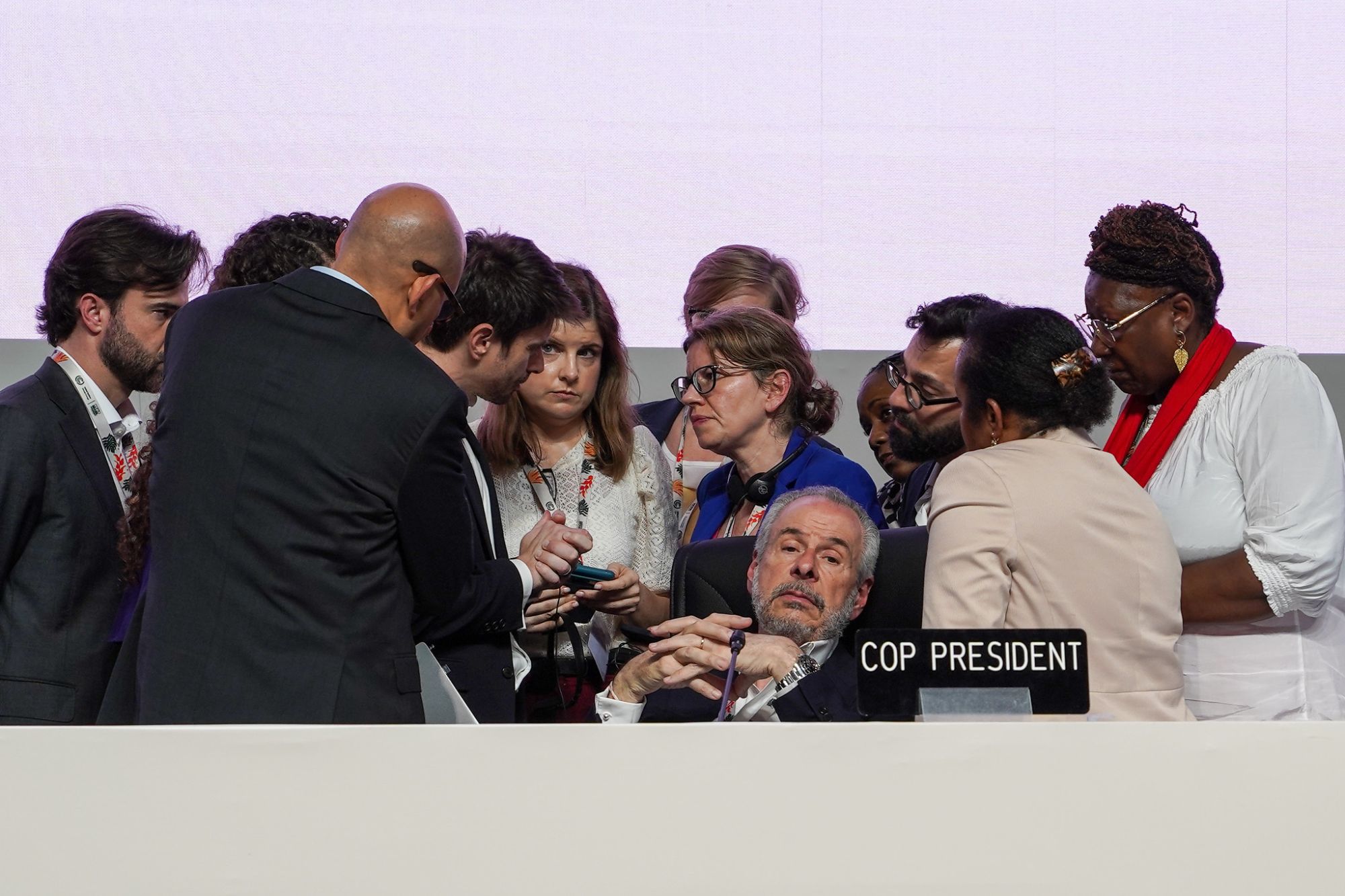
Maybe what we learnt was that America isn’t the only problem. The US have often played a blocking role at the UN climate change COP negotiations, with occasional blasts of leadership like the talks in Paris in 2015 which secured the landmark Paris Agreement on Climate Change. But in the absence of the US this year, getting agreements out of the remaining 193 countries still proved hard. Negotiations were tough, progress was slow, and the final plenary had to stop for heartfelt objections from several of Brazil’s Latin American neighbours. Saudi Arabia (oil and gas), Russia (gas) and India (coal) all seem to have worked successfully to block any more action on fossil fuels. With the other superpower away, China chose not to muscle in and take the lead; their embrace of clean technology balanced against their dislike of multilateral agreements.
Stocktake
In the Paris Agreement each country promised to share a plan to cut their emissions over the next ten years, and update it every five years. 2025 is a year for updating the plans. Each nation was meant to publish their plan so they could all see how big the gap was between the plans and the cuts needed to limit global average temperature warming to 1.5 degrees, the level scientists says we must stay below in order to avoid the worst impacts of climate change. They were then meant to make extra pledges to close the gap. But not everyone has made a plan, not all the plans are any good (Climate Action Tracker does ratings), and no extra action got agreed in Belém. This was COP30’s main job and it couldn’t do it, so we remain on course for 2.7 degrees of warming – which is much better than the 4 degrees we were headed for back at COP1, but will still be devastating and deadly.
Money
Money is always key. There was a good agreement on money for adaptation – richer countries transferring money to poorer countries for things like flood preparedness and training farmers to grow drought-resistant crops. Rich countries will triple their funding to $120 billion a year; not enough, but a lot. They’ll start increasing now and will hit $120b in 2035. It will come out of the $300b by 2035 promised last year at COP29 in Baku to help developing countries respond to climate change. That’s still good progress as rich countries are worried about their economies and the rise of populism, and it’s harder than ever to get money out of them, particularly for adaptation which mostly doesn’t make a profit.
There wasn’t any new money for loss and damage – voluntary compensation for climate change that you can’t adapt to. But the Loss & Damage Fund will start making grants next year from the money already received.
Forests, and more money
This was Brazil’s top priority, and the good news is new money was secured for a new Tropical Forests Forever Facility. $6.5 billion was pledged to pay governments and local communities to look after forests instead of cutting them down. Brazil and Indonesia put in $1b each and Germany, France, Norway and others chipped in (not the UK, though perhaps they’ll announce it in the budget) and they plan to raise more from the private sector. This is hopeful, but indigenous people are not yet satisfied that much of the new funds will actually reach them or that the new Fund will listen to them much.
Brazil couldn’t get a formal agreement by all countries about deforestation. Forests absorb carbon out of the atmosphere in a hugely useful way; chopping them down to farm cattle or grow animal feed creates emissions instead. Instead, COP agreed to set up a voluntary mutirao process for a deforestation roadmap and report back next COP. (Mutirao is a brilliant Brazilian concept for a decentralised, collaborative movement where everyone heads in the same direction in their own way but stay together.) This could be an easier way for the willing to make progress faster, or it could go nowhere.
Fossil fuels go BAM
Brazil couldn’t get agreement to phase out fossil fuels. Obviously this is the single biggest thing we need to do about climate change and it needs to happen fast, but there wasn’t consensus to agree it. Fossil fuels and the countries that produce them are still powerful. Instead there will be another voluntary roadmap on how to get away from fossil fuels. This one has a great name, the Belém Action Mechanism, or BAM. Colombia will host a summit in April to get it moving, and there’s good potential – a lot of global civil society had been calling for it and working on the plans and saw this as a win.
Indigenous peoples
This COP had more indigenous people taking part than ever before, including an old friend of Arise, Jocabed Solano. There was a very welcome Forest and Land Tenure pledge of $1.8b, to support indigenous people and their land tenure rights, and protect forests. Brazil agreed to recognise 10 new indigenous people’s territories.
Powering Past Coal
One of the successes of COP26 in Glasgow was the Powering Past Coal Alliance, who pledge to stop burning coal for electricity. This COP, South Korea joined, which is great news as they have a lot of coal power stations, but not as great as it might be because they won’t shut them all till around 2040. Brazil had been planning to build a new coal power station, and announced they’re cancelling it, as a COP host should.
Next time
Next year’s COP will be in Turkey, or Türkiye, in the south coast city of Antalya, run jointly with Australia, as they both wanted to host and have been arguing about it for the last two years. What could possibly go wrong? In 2027, Ethiopia will host and lead COP32.
Final impression
This COP in the Amazon may be most remembered for the fire that broke out near the end, the rainstorms that burst through the roof at times, and the heat and humidity that threatened to overwhelm the aircon. Nature sounded the alarm loud and clear. Or it may be most remembered for the return of mass movements after a few COPs in authoritarian countries – this one began with a flotilla of thousands of indigenous people sailing to it up the Amazon, and continued with noisy protests and a huge civil society presence outside and inside this great gathering of 50,000 people. There were marches across the world.
It may be most remembered for being disappointing after the high hopes Brazil had set for it; extra money for adaptation, forests, and indigenous people is vital and hard-won, and the new roadmap discussions are welcome, but they don’t match the urgency of the crisis. Or it may be remembered for showing that multilateralism isn’t dead. This year has seen failure to agree anything at the global plastics treaty talks, and the US scuppering the plans to decarbonise international shipping at the International Maritime Organisation. Perhaps just keeping the show on the road and getting the rest of the world to agree anything, even something modest, is a win in the times we’re in.
If you’d like to find out more, try Christian climate scientist Katharine Hayhoe’s summary (and subscribe to her brilliant weekly newsletter) or Carbon Brief’s detailed rundown.
Find out more
Arise Manifesto – Find out more about how caring for creation and tackling climate change are major parts of our calling and mission as Christians (and how we can do it effectively), in the Arise Manifesto, Arise’s big picture, researched, Biblical, holistic and practical vision for a better world.
Take action – It’s important to read about and better understand these issues. Very important too is not just reading but taking action. Sign up to receive monthly actions from Arise that you can take by yourself, or better still with others in a local church group near you.
Latest news – Latest news from the Arise movement.
Sign up – Found this blog online, or sent it by a friend? Sign up to receive weekly blogs from Arise directly.