

Weekly Blog - 25 September 2023 - Nuclear Disarmament
The challenge of disarmament
This Tuesday 26 September is the International Day for the Total Elimination of Nuclear Weapons, the day when the world redoubles its efforts to end the scourge of nuclear weapons. In the almost eighty years since atom bombs were dropped on Hiroshima and Nagasaki at the end of the Second World War, nine nations have developed nuclear weapons, holding over 12,000 nuclear warheads between them. Around 350,000 people were killed, and many more injured, in the atom bombs dropped on Hiroshima and Nagasaki. Taeko Terame was one of those survivors. Just 15 at the time, she had been drafted in with thousands of other students to support the war effort by working in Hiroshima’s telephone bureau. When the bomb dropped she heard a “tremendous noise”. The walls collapsed. “I began to choke on the consequent smoke— poisonous gas, it seemed like—and vomited uncontrollably.” Terame escaped by jumping out of a second story window and climbing down a telephone pole only to find the city “engulfed in a sea of fire”. She swam across a river to safety. The only bridge across the river was in flames. She didn’t realise how badly injured she had been until much later when her younger brother started making fun of her. Her parents avoided giving her a mirror so she could look at herself, so she found one on a day when they were out. “I was so surprised I found my left eye looked just like a pomegranate, and I also found cuts on my right eye and on my nose and on my lower jaw. It was horrible. I was very shocked to find myself looking like a monster.” [1] Terame’s tragic story is just one of tens of thousands. Today’s nuclear weapons are massively more powerful still than those used at the end of the Second World War.
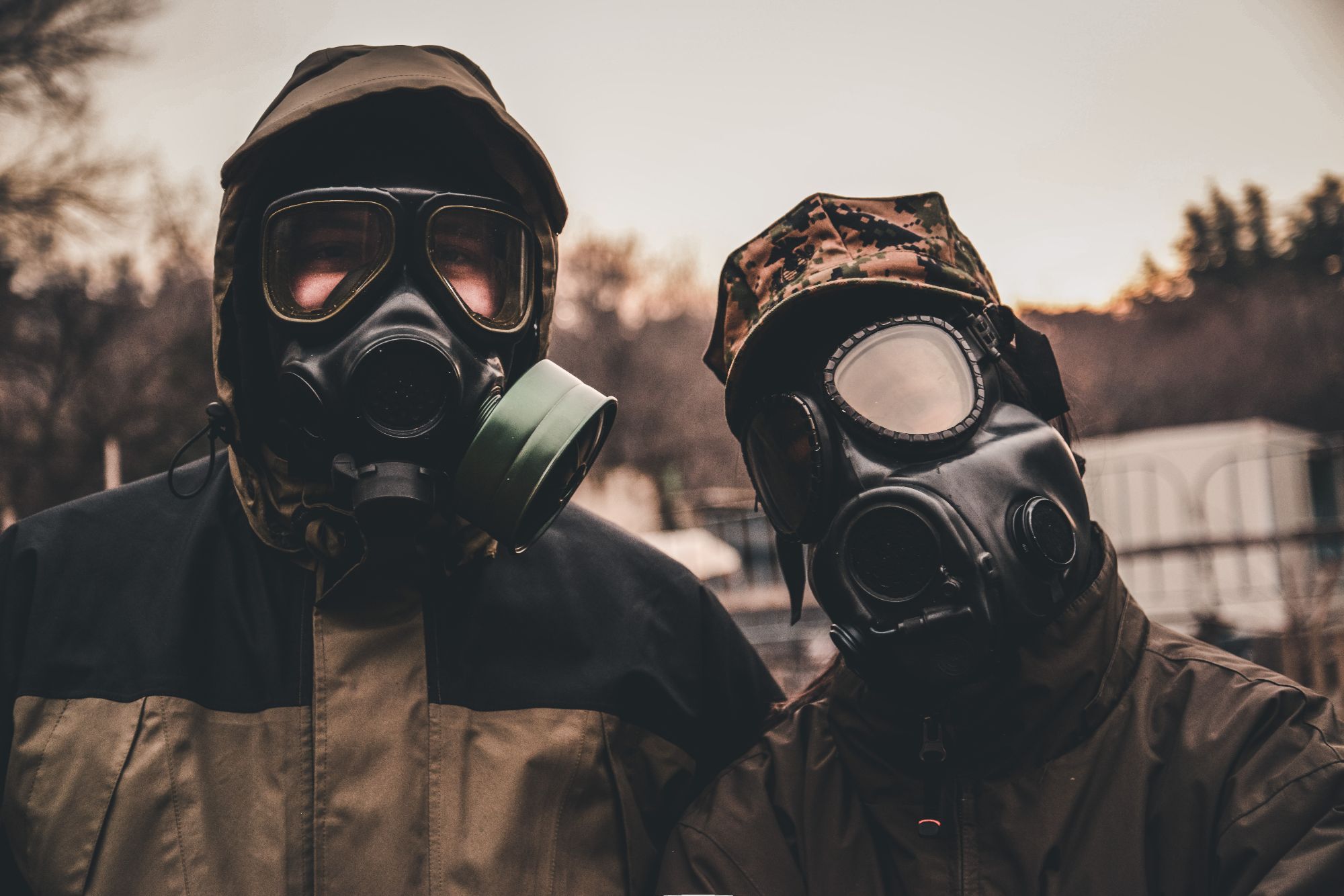
The continued existence and threat of nuclear weapons is a huge risk hanging over all humanity. In the last couple of years we have seen the danger and risk of nuclear weapons escalate significantly in the rhetoric coming from Russian President Vladimir Putin surrounding the war in Ukraine, and increasing tensions between China and the West. Even more worryingly, as nuclear technology proliferates, the dangers of even less stable regimes having control of nuclear weapons, and of mistakes, increases significantly. In addition to the nuclear threat is the added threat of other biological and chemical weapons of mass destruction. An even wider number of nations, and even non-state actors like extremist groups, have access or potential access to these terrible weapons.
What is a Christians response?
Of course, for our God, who loves peace, all such weapons are completely abhorrent. The book of Micah tells us how the Lord looks forward to his kingdom coming in full, when instead of nations taking up arms against each other, “He will judge between many peoples and will settle disputes for strong nations far and wide. They will beat their swords into plowshares and their spears into pruning hooks. Nation will not take up sword against nation, nor will they train for war anymore” (Micah 4: 3). One of the things that a major report from Arise, the Arise Manifesto, looks at in detail is how nations can work together to de-escalate tensions and risks – such as the existence and proliferation of nuclear, biological and chemical weapons – in order to prevent major conflicts from emerging (Arise Manifesto, pg 124 – 129).
Contain the spread, and negotiate the reduction, of weapons of mass destruction
This research finds that all nations should work together to prevent the further development, and contain the spread, of nuclear, biological, chemical or other weapons of mass destruction. All nations should sign and ratify the Nuclear Non-Proliferation Treaty and the Biological and Chemical Weapons Conventions, and work towards safely reducing existing stockpiles through negotiated agreements with independent verification. In a world where such horrors cannot be uninvented, unilateral disarmament by one side may not be the safest course. However, working together to safely reduce existing stockpiles through negotiated agreements with independent verification has proved to be effective. As the academics Adam Roberts and Philip Towle point out, “advocacy of more modest measures of arms limitation gained much ground, especially from about 1960 onwards” with the passing and successful implementation of the “main international arms limitation agreements”, and in the final years of the Cold War and the decades that immediately followed “the USA and Russia worked together to demobilize many of their nuclear weapons and to prevent them from spreading to other countries.” [2] (Arise Manifesto, pg 125 – 126)
Of course, in today’s world where international tensions between nuclear nations are again on the rise, and stockpiles of weapons have begun to increase once more, such a course will not be quick and easy and will require significant diplomatic skill, perseverance and patience. Nevertheless, the lessons from history are clear. Sympathetic nations working together to prevent the further development, and contain the further spread of nuclear, biological and chemical weapons, and working towards safely reducing existing stockpiles through negotiated agreements with independent verification holds out the best hope for eventually reaching a world free of such horrific weapons. No matter how difficult the conversation, or how much the relationship has broken down between major international players, they must keep talking to defuse tensions and misunderstandings, and build a dialogue for progress. Few other things can be as important. On this International Day for the Total Elimination of Nuclear Weapons, even in this time of global geopolitical tensions, it is more important than ever that all the nations of the world and all their citizens redouble their efforts to pray and work towards an end for all nuclear, biological and chemical weapons.
Find out more
Find out more about how God is at work in the world, and the role we all have to play in that work, in the Arise Manifesto. This report is Arise’s big picture, researched, Biblical, holistic and practical vision for a better world. It looks at what the Bible says, and what we can learn from the best data and the world’s leading experts on the five major areas of evangelism, discipleship, social justice, development and the environment. It then draws these lessons together into a practical road map for the changes we need to see in our world, which the Arise movement campaigns to achieve.
Found this blog online, or sent it by a friend? Sign up to receive weekly blogs from Arise directly.
[1] Nine Eyewitness Accounts of the Bombings of Hiroshima and Nagasaki, Smithsonian Magazine, (5 August 2020), https://www.smithsonianmag.com/history/nine-harrowing-eyewitness-accounts-bombings-hiroshima-and-nagasaki-180975480/
[2] Roberts, A., Against War and Towle, P., Cold War, in Townshend, C. (Ed.), The Oxford History of Modern War, (New York: Oxford University Press, 2005), pg 329, 164