

Weekly Blog - 27 June 2025 - Climate Insurance
How can the people of the world be insured against the massive risks that come with climate change? As the insurance industry is forced to consider this, might it drive more momentum for positive action?
Loss adjusting
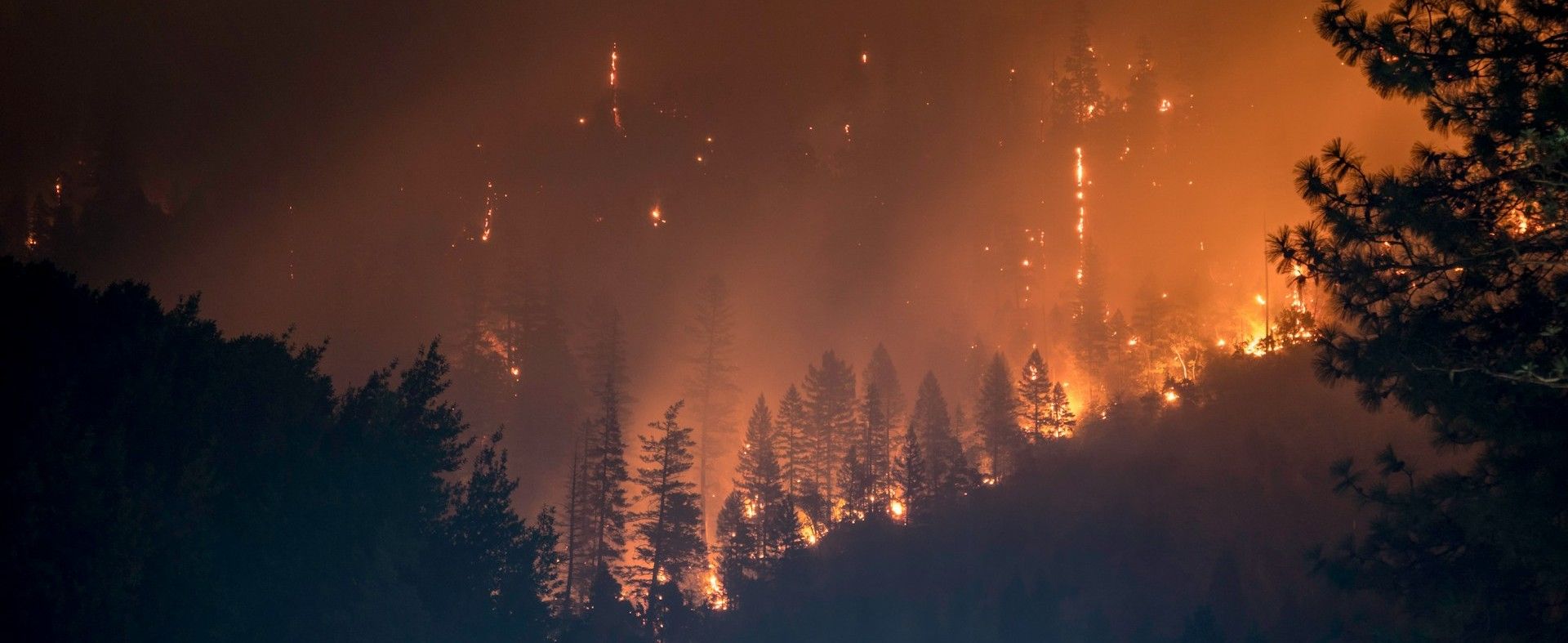
Climate change is often dramatic – floods, wildfires, storms, heatwaves, and glaciers landing on villages are images that catch the eye and stick in the mind. But now we’re well into a warmer era, we might be noticing more mundane impacts too. Insurance premiums are going up, as you may notice next time you insure your house, car, travel, or nearly anything else.
It’s pretty obvious why. More floods, wildfires, storms, heatwaves and landslides don’t come cheap. They all cause destruction and the insurance industry foot a big part of the bill, and that means higher premiums.
From Switzerland to California
The beautiful Swiss village of Blatten was destroyed by an avalanche in May this year, caused mainly by climate change thawing the permafrost which had held the high mountains above the village stable for 700 years. Scientists spotted the danger in time and the village was evacuated; only one man is missing, but the church, hotel and homes are all gone. Blatten's mayor, Matthias Bellwald, said "the unimaginable has happened" but promised the village still had a future. "We have lost our village, but not our heart. We will support each other and console each other.”
Switzerland has a big finance sector, including one of the world’s biggest insurance companies, Swiss Re. They report that natural catastrophes cost insurance companies $137 billion last year (including disasters like earthquakes that aren’t related to climate) with uninsured damage costing slightly more than that. That’s a lot of money, though they point out that the industry can handle it. Over the decade up to 2023 the cost was $2 trillion, say Aviva.
But as climate change does more damage, it will get harder to handle. More people won’t be able to afford home insurance and will have to cope without. Insurance companies will stop offering policies in some places. Governments will pick up more of the tab where the private sector decides it’s too risky, like the UK’s Flood Re scheme which backs up private insurers and covers part of the risk for them to insure flood-prone places. Or like California state government’s FAIR plan for parts of the state vulnerable to wildfires, which insurance companies have been quitting in the last few years.
California’s wildfires at the start of 2025 had such huge media coverage that even the insurance made the news. Peggy Holter was one resident whose house was destroyed, saying, “When this was built, it had everybody's approval. They chose to insure it for 47 years. They made money off people for 47 years. That's the point of insurance, isn't it, that you chip in, and, when somebody else needs it, they get it, and when you need it, you get it. But, in this case, they're saying, we're sorry. Too bad.” Her insurer stopped offering her fire coverage a few years ago, and nor would anyone else, so she’s relying on the government insurance which will pay out, but won’t cover the full cost of rebuilding her forest home.
Two new hopes
So more people are finding they can’t afford insurance as the prices go up, including for things less directly affected by climate change, like cars. More people are finding they can’t get insurance at all, or only if it excludes natural disasters. The same goes for businesses and organisations. This is bad news, obviously, and makes it harder to build the strong economy of Arise’s vision, chapter 5, but it also creates some new possibilities. Insurance companies are a big part of the finance system, and big employers, with a lot of clout with governments. The more scared they get about the changing climate, the more they may tilt to the parts of the business community that want to see faster action on climate change, shifting the balance away from the likes of the oil and aviation companies wanting to move slowly.
An old problem within governments is that the parts responsible for climate, like the ministries for environment or farming, are usually quite low in the pecking order. The departments that worry about inflation, like the Treasury in the UK, are usually near the top. So seeing climate change cause long term inflation from insurance (and food) puts the hot climate potato on finance ministers’ plates in a new way, and that changes the way governments think. It’s odd that governments may respond faster to inflation graphs going up and to the right than to pictures of avalanches and flaming trees, but that seems to be the world we’re in.
The goal is equality
“Our desire is not that others might be relieved while you are hard pressed, but that there might be equality. At the present time your plenty will supply what they need, so that in turn their plenty will supply what you need. The goal is equality,” Paul’s instructions to the Corinthian church (2 Corinthians 8:13-14) to help their brothers and sisters hit by famine has a lot of echoes for how we share out the unequal effects of the climate crisis. Peggy from southern California echoed it too.
One way to put that into practice is Tearfund’s insurance policy for chilli farmers in Pakistan; drought conditions and a long period of 45 degree heat has triggered a payout which will help 18,000 people cope. This is an experiment where Tearfund took out the policy on the community’s behalf, with a public-private partnership between an insurance company and government aid. “People at risk of extreme drought and famine must have fair access to insurance,” said Jonathan Johnson, Tearfund Pakistan’s Country Director.
A way to do the opposite is insuring oil, gas and coal companies as they extract more of the fossil fuels which created the warming. Each mine, rig or pipeline needs insurance and would probably have to close down without it; even more importantly each new project needs insurance to go ahead. Insure Our Future is a helpful resource to show which insurance firms won’t cover new fossil fuel extraction and which will, it’s worth checking before (if you can afford to) you next renew your insurance.
Let us pray for the insurance industry to make wise decisions and think long term, use their influence well, and find new ways to insure people who need it most. Let us encourage them by where we put our premiums.
Find out more
Arise Manifesto – Find out more about why addressing climate change and caring for creation is an essential part of our mission as God’s people in the Arise Manifesto, Arise’s big picture, researched, Biblical, holistic and practical vision for a better world.
Take action – It’s important to read about and better understand these issues. Very important too is not just reading but taking action. Sign up to receive monthly actions from Arise that you can take by yourself, or better still with others in a local church group near you.
Latest news – Latest news from the Arise movement.
Sign up – Found this blog online, or sent it by a friend? Sign up to receive weekly blogs from Arise directly.