

Weekly Blog - 28 March 2025 - Electric Cars
This week we have another guest blog from a great member of Arise’s Council of Reference. In the week where President Trump announced new tariffs on car imports, Ben Niblett takes a look at how the UK is doing in the transition to affordable fully electric cars.
Make Us Good, But Not Yet
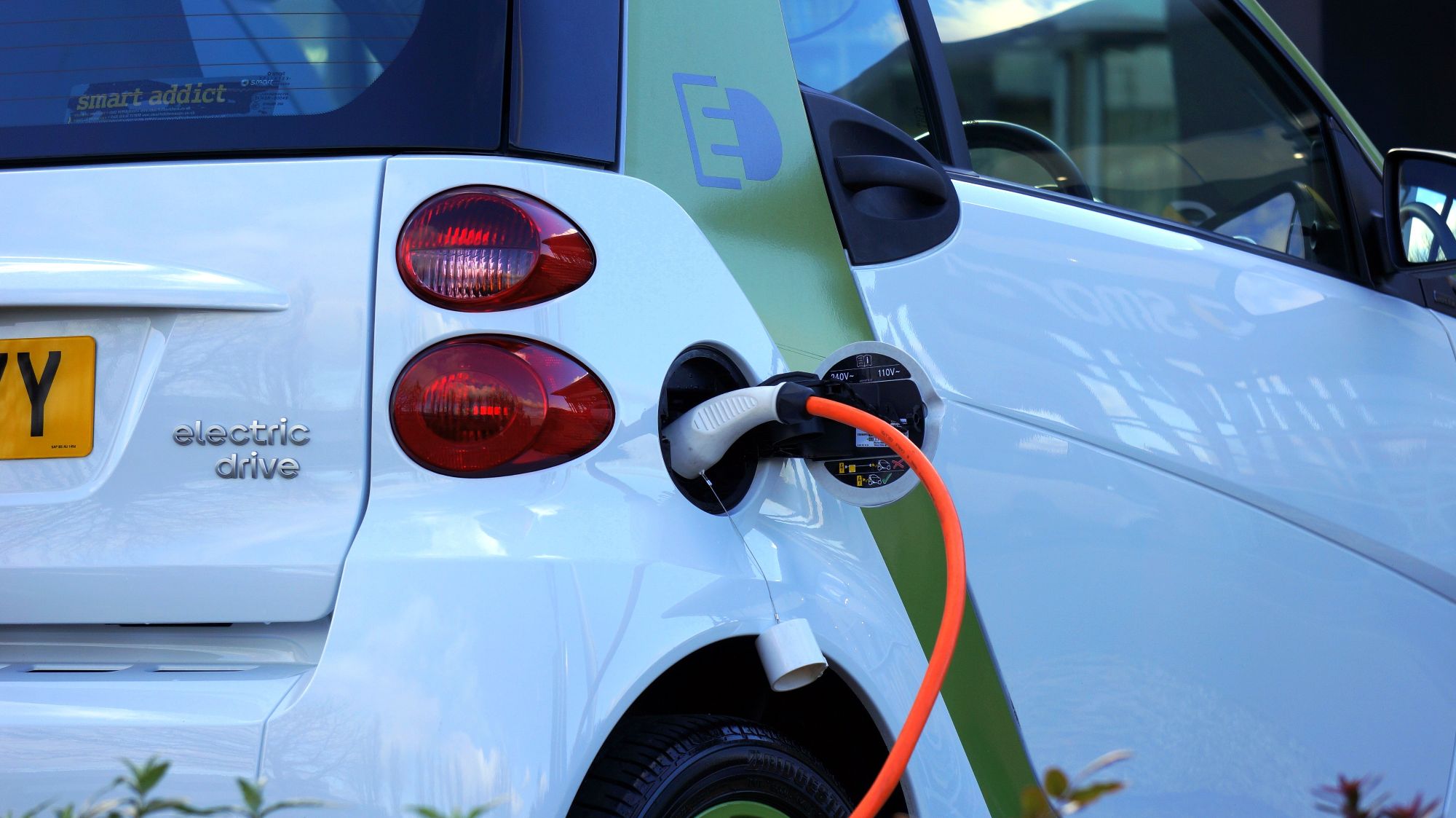
Switching to electric cars is one of the easiest ways to cut emissions and get to net zero. It’s a good example of how the great transition away from fossil fuels needs both companies and governments to get it right. Electric cars have been in the news recently – some car companies are warning the UK government off making them go electric too quickly, and the government have consulted about the plan to ban new petrol cars. As Elon Musk helps lead the Trump administration there’s been a lot of media interest in whether Tesla sales are falling as people vote against him with their wallets. Back in Britain, the Committee on Climate Change (CCC – the government’s climate advisors) have just said the switch to electric transport is central for reaching net zero.
Encouraging news
Electric cars are significantly cleaner than petrol or diesel cars. The emissions are around half as much as a petrol car including making, driving and fuelling it. That’s much higher than walking of course, or cycling, or public transport, but it’s still a great improvement and will get bigger as electricity gets cleaner. Generating electricity used to be the largest part of the UK’s emissions, but we’ve done well at cleaning it up and using less of it, so for the next 25 years to reach net zero in 2050, the biggest emissions cuts need to come from transport, specially cars, making it a vital part of Arise’s 4 Shifts.
How’s that going? Pretty well, but it needs to speed up. Last year nearly a fifth of new British cars were electric, compared to 14% worldwide. There are two main barriers to overcome to go faster. First is expanding the charging network to keep pace with all the new cars, so drivers know they’ll be able to charge wherever they go. Most drivers do most of their charging at home, and two thirds of UK homes have off-road parking, but providing enough charge points for the other third is an issue. The other big barrier is price. Batteries are more expensive to make than engines, so electric cars have higher prices. But making batteries is getting cheaper with scale and repetition, in the same way making mobiles and solar panels did. In the next three years batteries will reach price parity with engines and then become cheaper, say the CCC. Range anxiety is less of an issue now as most new cars have a range over 200 miles, many of them much further. And as we haven’t had mass market electric cars for long, there aren’t many older, cheaper ones for sale second hand yet, though that will change over time.
Electric cars are already cheaper to run than cars with engines, partly because electricity is cheaper than petrol or diesel, and also because electric motors are more efficient than engines. More of the energy that goes into an electric motor in the form of electricity gets turned into moving the car than when petrol goes into an engine – a lot of the energy in the petrol gets turned into heat and sound, not motion. The mechanism is much simpler, it doesn't have all the moving parts an engine has, and that means it will probably need much less servicing over its life. That’s good news for owners who save money and inconvenience, but bad news for car companies who make money over a car’s life by selling spare parts. With electric cars, that income is pretty much gone. Back at the start of the 20th Century when car pioneers were choosing between petrol, electric, or steam power, part of the reason they chose petrol over electric was that moving parts which wore out and needed replacing made it a better business model (steam was never a front runner).
What’s the plan and when’s the ban?
The UK government plans to ban new petrol and diesel cars from 2030, and allow only electric cars from 2035. They’re deciding what to do about hybrids, which have a small electric battery and can drive half a mile or so at low speeds just on the battery, but are basically petrol cars made a bit more efficient – game changing 20 years ago but not now. They’re also deciding what to do about plug-in hybrids, which have a slightly bigger battery and can charge from a plug, so can drive whole shorter journeys without any emissions from burning fuel in the engine – if drivers charge them – with an electric range of as little as 20 miles for some models and as much as 70 for others.
Be on your guard
“Be as shrewd as snakes and as innocent as doves. Be on your guard”, Jesus warned the disciples in Matthew 10:16 –17, sending them out into the villages to share the good news. He knew some people would be hostile to it and would fear change, and in a milder way this is good advice for us when it comes to car companies and media coverage.
Many of the car companies have worked hard to confuse hybrids with electric cars in the minds of the public and politicians making decisions about them. ‘Self-charging hybrid’ was the term Toyota coined, based on the way hybrids charge by capturing some of the energy when the car brakes, not claiming to have invented perpetual motion. ‘Electrified’ cars is another industry fudging word for hybrids. It sounds green, it’s a genuine improvement on a pure petrol or diesel car, but it’s still emitting nearly as much as one instead of emission-free driving from a full electric.
The government recently consulted on the plans for the ban, and a lot of the car industry is lobbying them hard to relax it, helped by a lot of the media, specially the parts that have car ads. The government also have targets to boost electric car sales before 2030, called the ZEV mandate. Car companies that miss the target by a long way have to pay fines, and if they miss by a short distance they have to pay fees to companies that exceeded their target. This year’s target is 28% of new cars to be electric, with some wriggle room to include emissions saved from selling more efficient fossil fuelled cars; so far the industry as a whole is on 23% which is enough to avoid fines. The target rises quite fast each year to 2030. It’s a good policy, and the car companies helped negotiate it and have had several years to prepare, but some are still lobbying to water it down – Vauxhall recently shut a factory in Luton that made vehicles for export to Europe, but still blamed the UK’s ZEV mandate in the media. The man who pioneered electric cars with the Nissan Leaf, before running Aston Martin, says, “The ZEV Mandate is proving that demand exists for BEVs. However, it requires a price correction which is good news for consumers.”
It’s hard for car companies to put ethics first and sell electric cars that don’t cause climate catastrophe, when they can still make more profit from selling cars with engines that do. Costs are lower and profit margins are higher for internal combustion cars, and they’ve got a lot of investment tied up in the old technology. Their shareholders are often more interested in short-term returns than long term value; and if they don’t do it, their competitors will, unless government regulates for them all. So they’ve brought out several premium and mid-level electric cars where they can still make a good return, but hardly any smaller, cheaper mass market cars; and whether large or small, a lot of electric cars have a price premium that’s bigger than the extra cost of making the batteries. Car firms have been going as slowly as they can, mostly. Until last year when the ZEV mandate began, and government regulation and the possibility of fines changed the calculations – and several cheap, mass market electric cars launched in the UK, and found buyers.
A detour round Elon Musk
Tesla weren’t the first company to get viable electric cars to market – Renault and Nissan were. But Tesla did it better, and being a new company using tech to make cars (instead of an old car company learning about new tech) worked well for them. For many years they’ve been market leaders in many countries. For the last two or three years others have been catching up though, as Tesla stuck to their two main models and rivals have brought out lots of new ones (97 in the UK by the end of 2023).
Elon Musk joined Tesla while it was still young, became the leader and frontman, innovated, took big risks, took on the established car industry, didn’t do things the conventional way, nearly went bankrupt, and ended up as a visionary success story. Tesla helped make him the richest man in the world. These days he’s also on Donald Trump’s team, doing and saying controversial and mostly appalling things in a hurry, like slashing the aid budget. This could have a silver lining of persuading Republicans to start buying electric cars, which Americans have tended to associate with Democrats. Donald Trump made a show of ordering a Tesla at the White House recently. But people repelled by Musk in America and Europe may go off Tesla too. The media reports falling Tesla sales – down in January and up in February in Britain. There are boycott calls, and reports of Tesla owners buying “I bought this before Elon went crazy” bumper stickers. Or we may find that electric car sales are unpoliticised and Tesla goes on as before, gently losing market share but still selling lots of cars. In the markets Tesla’s share price has halved since shooting up after the US election.
Conclusion
Make me good, but not yet, is the prayer attributed to St Augustine as a young man, and it’s very much most of the car companies’ approach – they understand climate change, most now sell some electric cars, but want to go on selling fossil fuelled cars as long as they can while they still make more money that way. But the biblical approach is to put cutting emissions and serving people in poverty ahead of maximising profits, and achieving that quickly relies on government making the industry go faster, providing the charging network, and helping to continue to drive the cost down for the public. Let’s pray for Business Secretary (and outgoing chair of Christians on the Left) Jonathan Reynolds to stand firm against the lobbying and make wise decisions now the consultation is done. He’s pondering as we speak.
Find out more
Arise Manifesto – Find out more about why switching to 100% renewable energy, including electric cars, is a crucial part of caring for God’s creation in the Arise Manifesto, Arise’s big picture, researched, Biblical, holistic and practical vision for a better world.
Take action – It’s important to read about and better understand these issues. Very important too is not just reading but taking action. Sign up to receive monthly actions from Arise that you can take by yourself, or better still with others in a local church group near you.
Latest news – Latest news from the Arise movement.
Sign up – Found this blog online, or sent it by a friend? Sign up to receive weekly blogs from Arise directly.