

Weekly Blog - 28 November 2022 - China Protests
China Protests
During the last week, the largest wave of protests since Tiananmen Square in 1989 has broken out across China. Thousands of people joined protests that have taken place in more than a dozen cities and in university campuses across the country. Around the world Chinese expatriates have also been protesting in capital cities, outside embassies and in universities. The protests began on Friday 25 November, and were initially focused on the country’s deeply unpopular zero Covid strategy. China’s approach of mass testing, contact tracing, quarantine and strict lockdowns was effective at the beginning of the pandemic. But it has been unable to stop more transmissible variants. Chinese citizens have developed less natural immunity as a result of the policy, and are under vaccinated, with less effective vaccines than those available in the west.
The anger felt by ordinary Chinese people at the way their government is handling the pandemic has bubbled over into the mass demonstrations. The protestors have now also begun to call for wider political freedoms and democratic reform. Demonstrators have been holding up blank sheets of paper to protest the lack of freedom of speech, and openly calling for President Xi Jinping to be removed.
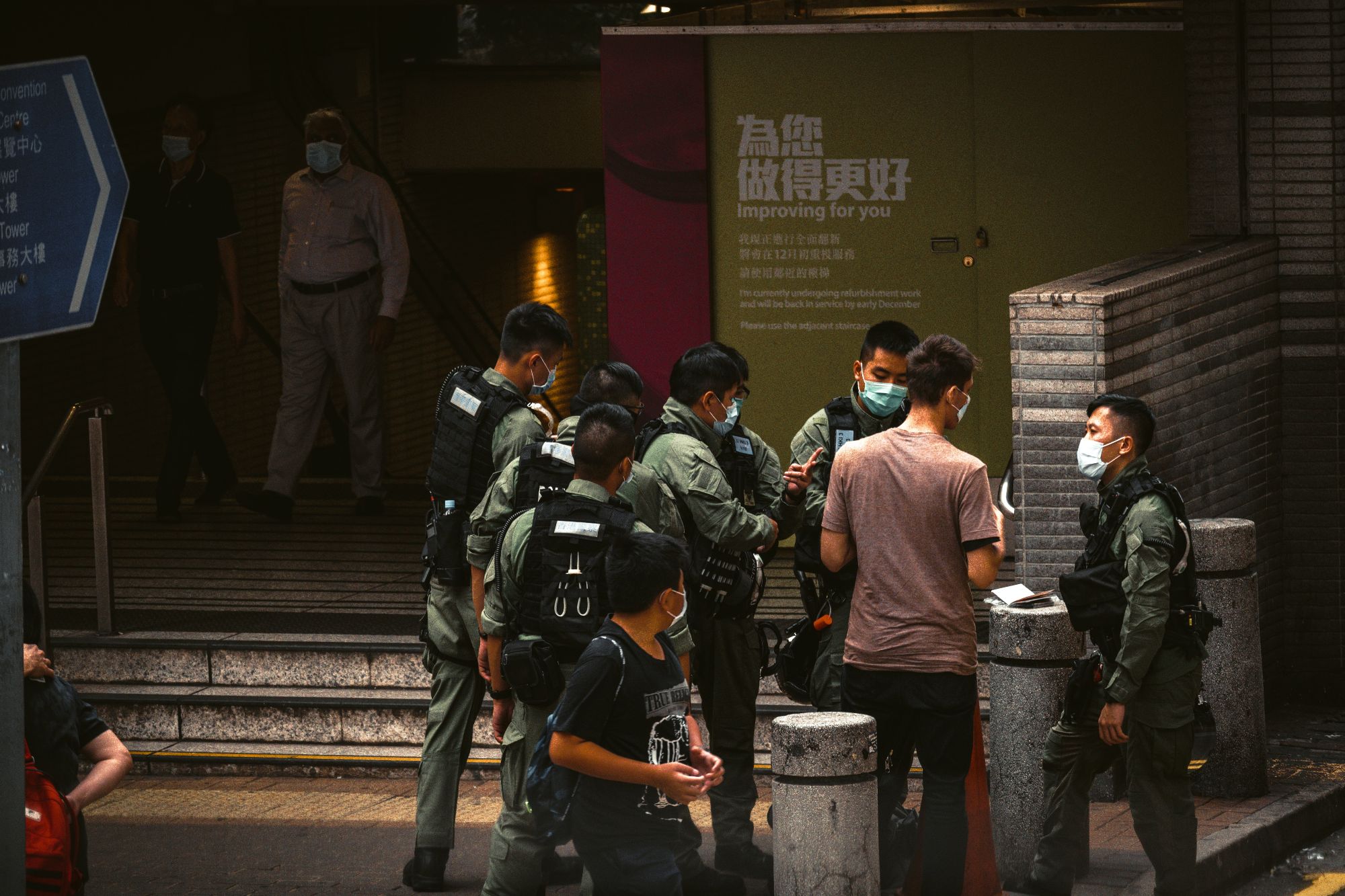
The Chinese authorities have responded to the protests with a huge show of force. Police have flooded city centres since Monday 28 November, reducing the numbers of protests (that were previously wide spread over the weekend). They have also been seen checking people’s phones, and have called protestors who have been identified as having taken part in demonstrations to warn them against further action. Individual protestors, and even journalists, have been temporarily detained. Censors have suppressed any mention of the protests on Chinese social media.
But despite the threat, many protests continue. The young people who have found their voice, become mobilised, and shown tremendous courage in challenging the regime, continue to communicate, take their message online, and plan further action. These unprecedented demonstrations have exposed widespread resentment and frustration with China’s authoritarian regime, and the desire of the people of China for much greater freedom and democracy.
Reform Movements
A major report from Arise, The Arise Manifesto, looks in detail at what the Bible has to say, and what history and the world’s leading academic experts have to teach us, about what works best for dramatically improving democracy, human rights and good governance. It finds that overwhelmingly the most successful way of doing this is through just such mass, popular, peaceful, bottom-up uprisings, like the ones we have seen recently in Iran, and now possibly in China.
In the Bible we see how the people of God endured multiple repressive regimes over centuries. Yet throughout, God’s command to them is not to take up arms against such regimes. Such violence only produces more bloodshed, and often ends up replacing one brutal regime with another. Instead the Biblical model is that Christians should peacefully speak truth to power in a bottom-up way. We see this in Joseph and Moses influencing and challenging the pharaohs of Egypt. Later, the prophets did the same to the kings of Israel and Judah; and Daniel, Esther, Ezra and Nehemiah influenced Babylonian and Persian kings. In the New Testament, John the Baptist and Jesus himself spoke out against injustice from Herod, tax collectors, soldiers and Jewish religious authorities.
Turning to the lessons from history, academics and researchers show how around the world in recent decades, bottom-up popular peaceful reform movements have again and again proved to be the most successful method of dramatically improving democracy, human rights and good governance. We have seen such movements in Serbia, Madagascar, Georgia, Ukraine, Lebanon, Nepal, Estonia, Latvia, Lithuania, Poland, East Germany, Slovenia, Mali, Bolivia, the Philippines, Zambia, South Korea, Chile, Argentina, Haiti, Brazil, Uruguay, Malawi, Thailand, Bulgaria, Hungary, Nigeria, and many other countries.
Such peaceful bottom-up reform movements avoid playing into the hands of autocratic regimes by confronting them in the area of physical force, where the regime is strong. Instead they peacefully refuse to cooperate with the regime, and continually expand the numbers involved, increasingly isolating the regime until it is forced to concede. Where such reform movements have been successful, they have seized the initiative with a clear strategy and tactics that continually evolve, to keep the regime off balance and reactive. They have built ever larger coalitions and attracted mass numbers of people who have demonstrated peacefully in visible city centres. They have also used non-violent direct action like strikes, sit ins and occupying areas. Where autocratic governments have responded with force, they have turned that against them, using the outrage it sparks to gather ever greater support. Successful reform movements have made good use of inspirational leaders, and used social media and other communications routes well, to get their message out. They have captured the sympathy of the international community, the media, and more and more sectors of society, increasingly isolating the regime, until even the police and military see which way the wind is blowing and begin to defect, and the regime is forced to concede.
Of course such movements also require great courage and perseverance from those involved. They are not guaranteed to succeed every time. But overwhelmingly the power of ordinary people peacefully refusing to submit is remarkable, and has continually proved the most successful way to improve democracy, human rights and good governance in nations around the world.
Christians at the heart of Reform Movements
Christians and churches have played a hugely important central role in such reform movements in nations all around the world. They have worked well alongside journalists, academics, activists, students, trades unions and others in the movement. There are currently 96.7 million Christians in China, just under 7% of the population, and the church is growing fast. Christians are playing an important part in the current protests, just as they did in the demonstrations in Hong Kong in 2019.
Supporting such bottom-up Reform Movements in countries around the world (and the Christians that are so often at the heart of them) is one of three key focus campaigns for Arise. They are one of the brightest hopes for our world.
The journey to a free, democratic China will no doubt be a long one, with many setbacks along the way, but the recent protests may just be the first steps on that journey.
Find out more
Find out more about how bottom-up reform movements, with Christians at their heart, have transformed our world, and have huge potential for positive change in the future, in the Arise Manifesto. This report is Arise’s big picture, researched, Biblical, holistic and practical vision for a better world. It looks at what the Bible says, and what we can learn from the best data and the world’s leading experts on the five major areas of evangelism, discipleship, social justice, development and the environment. It then draws these lessons together into a practical road map for the changes we need to see in our world, which the Arise movement campaigns to achieve.
Found this blog online, or sent it by a friend? Sign up to receive weekly blogs from Arise directly.