

WEEKLY BLOG - 4 JUNE 2025 - POPE LEO AND US
What lead will the new pope give? The early signs are hopeful.
Pope Leo and us
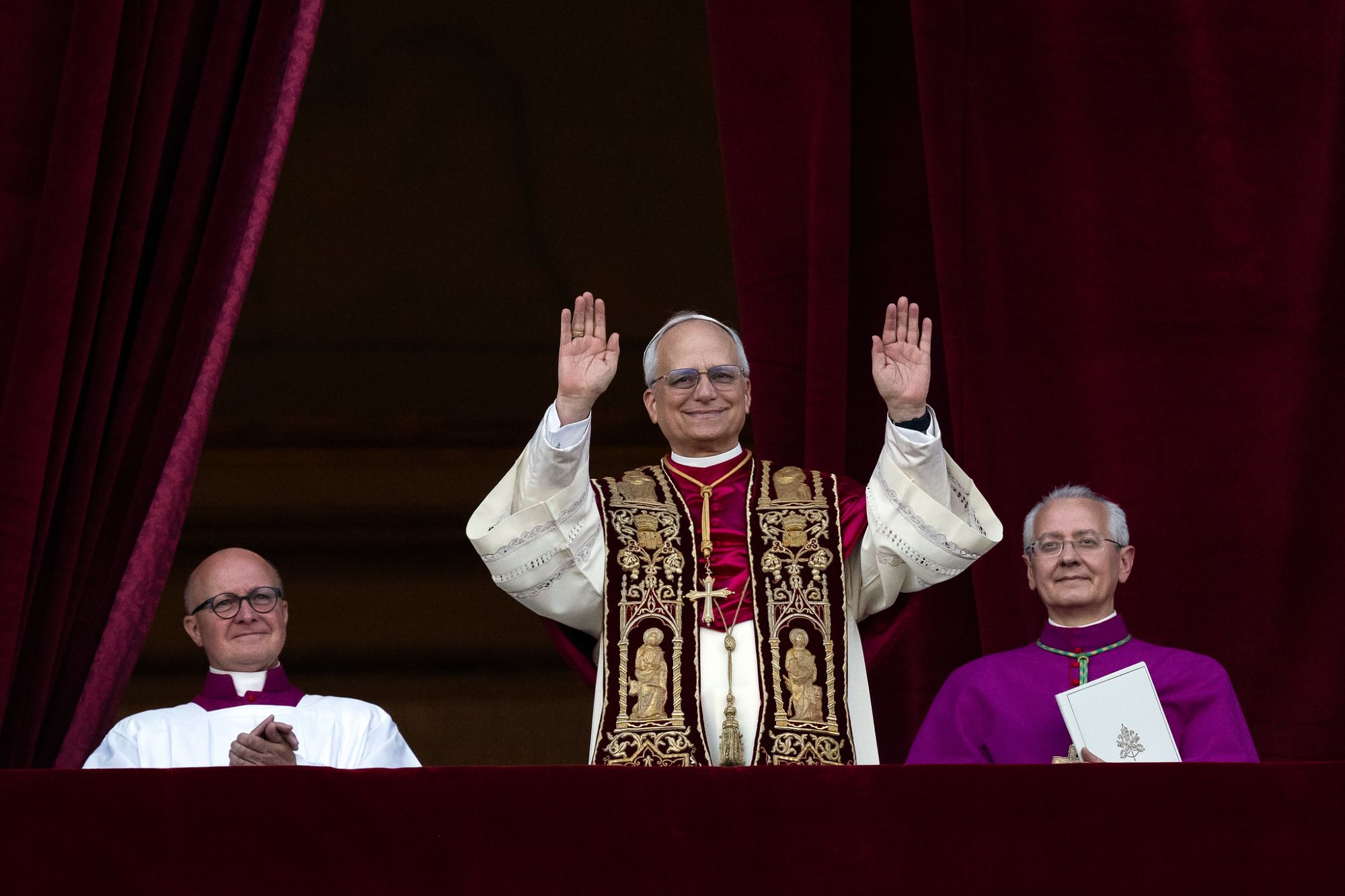
Last month a new pope was elected, Leo XIV. He’s the first pope from the USA, the first pope from Peru, and the second from Latin America, because he has dual US and Peruvian citizenship. He’s now leading the biggest church in the world, probably the biggest organisation of any kind in the world, with around 1.4 billion Catholics.
What lead will he give? We can already see some encouraging signs:
- He worked as a missionary and emphasised evangelism in his first sermon as pope
- He chose the name of a pope who spoke out about poverty and inequality
- He’s already sent a video message on climate change
He was born in Chicago in 1955, making him the first pope born after WW2. He was ordained in the US and spent 20 years working in Peru as a priest and trainer of priests and then a bishop. He’s also spent time in Rome leading the religious order of Augustinians worldwide, and in the Vatican advising on the appointment of bishops.
First words
Pope Leo’s first sermon focused on faithfully sharing the Gospel, with humility, backed up by ‘daily conversion’ – starting where Arise’s manifesto starts, with evangelism and discipleship.
His sermon at his inaugural service continued the theme, and added peace, disarmament and integral development. He followed that up with an offer to host Ukraine peace talks, and a call for peace in Gaza and the return of ‘dignified humanitarian aid,’ at his first general audience in St Peter’s Square.
He lost no time in sending a video message to mark the 10th anniversary of Pope Francis’s encyclical Laudato Si on caring for creation (encyclicals are where popes set out the church’s teaching on a particular issue.) He encouraged preparations for the COP30 climate talks in Brazil this November, and linked caring for creation and cancelling debt, from the jubilee passages in Leviticus 25 and Deuteronomy 15, in this jubilee year for the Catholic church.
Lessons from Peru
Leo’s commitment to the poor and to those marginalised in society follows on from Pope Francis’s, and he worked a lot with indigenous people, victims of trafficking and migrants when he was Bishop of Chiclaya. CAFOD’s Head of Latin America Programmes Diana Trimino Mora says, ‘Our Amazonian partners are rejoicing and full of hope,’ as they know he understands the environmental and social threats they face.

Peru gave him experience of standing up to terrorists and dictators, and of poverty. He saw the impacts of climate change and the damage mining caused to indigenous people and the Amazon forest.
Cardinal Vincent Nicholls, the Catholic Archbishop of Westminster, said there are two names that tell us a lot about the new pope – Leo, and Augustine.
Leo
Popes choose a new name thoughtfully. The former Cardinal Robert Prevost chose Leo mainly to follow in the footsteps of Leo XIII, whose main legacy is starting Catholic social teaching. Leo XIII was appalled by the cruelty and inequality of the industrial revolution. ‘Covetous and grasping men’ had ‘been able to lay upon the teeming masses of the labouring poor a yoke little better than that of slavery itself,’ he wrote in his encyclical Rerum Novarum – new things – in 1891. Encyclicals are documents where popes lay out Catholic teaching.
Catholic writer Paul Vallely gives a helpful summary. It looks at the damage of greedy capitalists dreaming of even greater wealth for themselves, and the damage of violent socialist revolutionaries dreaming of a totalitarian state. Instead Leo XIII proposed ‘subsidiarity’ – that decisions should be decentralised and people should have a say in decisions that affect them. He gave strong support to trade unions, and for freedom of assembly for other associations, and the church’s support ‘to better the condition of the working class by rightful means.’ This included a big role for the state ‘the public administration must duly and solicitously provide for the welfare and the comfort of the working classes’ including decent wages, security, housing, and Sunday rest from work. This all fits Arise’s vision very well.
Leo XIII is remembered for other things we might feel hopeful about, like encouraging more study of the bible, and maybe less hopeful about, like promoting devotion to Mary and the sacred heart of Jesus, and writing an encyclical to say Anglican ordinations weren’t valid. But those are less likely cues for Leo XIV.
Augustine
St Augustine of Hippo was a 4th Century theologian, a North African from what is now Algeria, and perhaps the most influential Christian thinker after New Testament times, on free will, original sin, just war, the role of the state, holiness, repentance, how to understand scripture and many other things.
Robert Prevost led the Augustinians worldwide for 12 years and is the first pope from the order. They were founded as friars in the 13th century; by this point monasteries had tended to become rich and powerful, and the friars were set up to live by begging and serve the people unburdened by possessions or bureaucracy. Friars still have an ethos of living simply and sharing everything according to need, without private property; and of service and evangelism. Prayer, bible study, ‘reflection on the realities of our time,’ and devotion to the poor and the suffering are particular hallmarks of Augustinian spirituality, along of course with the study of St Augustine.
US vice-president JD Vance is a Catholic, and famously said his administration’s immigration policy was based on a Christian idea called the ordo amoris, ‘we should love our family first, then our neighbors, then love our community, then our country, and only then consider the interests of the rest of the world.’ Both Pope Francis and Cardinal Prevost tweeted to say this was a misunderstanding of Christian love; and Prevost was well placed for that because the original idea was St Augustine’s.
So let’s pray for the first US and Peruvian pope to lead well and speak wisely and radically to Catholics and all Christians, to governments and decision makers, and to all people, and be encouraged by the way he’s begun.