

Weekly Blog - 8 May 2023 - The Right to Protest
Coronation day arrests
The Coronation Day of King Charles III in London last Saturday 6 May has been widely hailed as a success, except for one slight blot, the controversial arrest of peaceful protestors by the police. Some 32 people were detained on suspicion of causing a public nuisance, and 14 arrested on allegations of breaching the peace. They came from the anti-monarchy group Republic and climate protestors Just Stop Oil. All have now been released.[1] The arrests were made under the controversial new Public Order Act which came into effect at the beginning of the month, further building on similar controversial powers to restrict protest and campaigning passed last year in the Police, Crime, Sentencing and Courts Act and in the Lobby Act of 2015. The arrests have attracted widespread controversy, as demonstrators were only attempting to engage in peaceful, planned, non-disruptive protest.
Many people might question the timing and the taste of such protests, especially on the coronation day of a man who has actually done so much to mobilise action on climate change and to support disadvantaged young people, volunteers, charities, public sector workers and the armed forces. There may also be significant sympathy for the police, carrying the enormous burden of ensuring the coronation day passed off safely, and having to make split-second decisions in the moment. But, whatever our views about the wisdom of the protests, or indeed about the monarchy itself, the right to protest peacefully in a non-disruptive manner is a fundamental human right. As Christians, we should be deeply concerned by these arrests, and the trend towards more restrictive legislation in recent years which lies behind them. This trend has been apparent not only in the UK, but also in many other western nations, as explored in a recent Arise blog on democracy in crisis.
Christians and peaceful protest
Throughout history, Christians and churches have played a hugely important role peacefully protesting as part of reform movements in nations all around the world, as a major report from Arise finds (The Arise Manifesto, pg 283 – 303). Right from Biblical times Christians have been speaking truth to power and peacefully protesting for governments to reform and become more socially just and to care for all in society, especially the poorest. From the very beginning to the very end of the Bible, we see God raising up his people; ordinary people to challenge the powerful and change the world. We see Joseph and Moses influencing and challenging the pharaohs of Egypt. Later, the prophets like Isaiah challenged the kings of Israel and Judah, “stop doing wrong. Learn to do right; seek justice. Defend the oppressed. Take up the cause of the fatherless; plead the case of the widow.” (Isa 1: 16 – 17) Daniel, Esther, Ezra and Nehemiah influenced Babylonian and Persian kings. In the New Testament, John the Baptist and Jesus himself spoke out against injustice from Herod, tax collectors, soldiers and Jewish religious authorities.
This has been true in more recent decades too. If we think back to the bottom-up nonviolent civil society protest movements of the past 200 years, Christians have been at the heart of so many of these. Christians successfully campaigned for the abolition of slavery in the eighteenth and nineteenth centuries; for political and prison reform and improved worker rights in nineteenth century Britain; for the first social spending welfare states in nineteenth and early twentieth century Europe. They protected indigenous communities from colonial exploitation across Africa, Asia, and Latin America and the Caribbean; Christian thinking hugely influenced Gandhi’s people movements in South Africa and India; Christians protected Jewish communities in Nazi occupied Europe in the mid twentieth century. Later, Christians were at the heart of the US civil rights movement and spoke out for democracy, peace, reconciliation and development, and against oppressive regimes and corruption in many countries across post-colonial Africa, Asia and Latin America and the Caribbean. Christians have successfully advocated against the regimes of Ferdinand Marcos in the Philippines, and against Augusto Pinochet in Chile. In the late 1980s and 1990s they were integral in the people movements in Poland, Russia and Eastern Europe which brought down Communism. They were also central to the movement that ended apartheid in South Africa. In more recent decades, Christians were at the heart of the Jubilee 2000 movement which cancelled billions of dollars of unpayable debt in developing countries, and in campaigning for action on the environment, including the achievement of the major 2015 Paris Agreement on climate change.
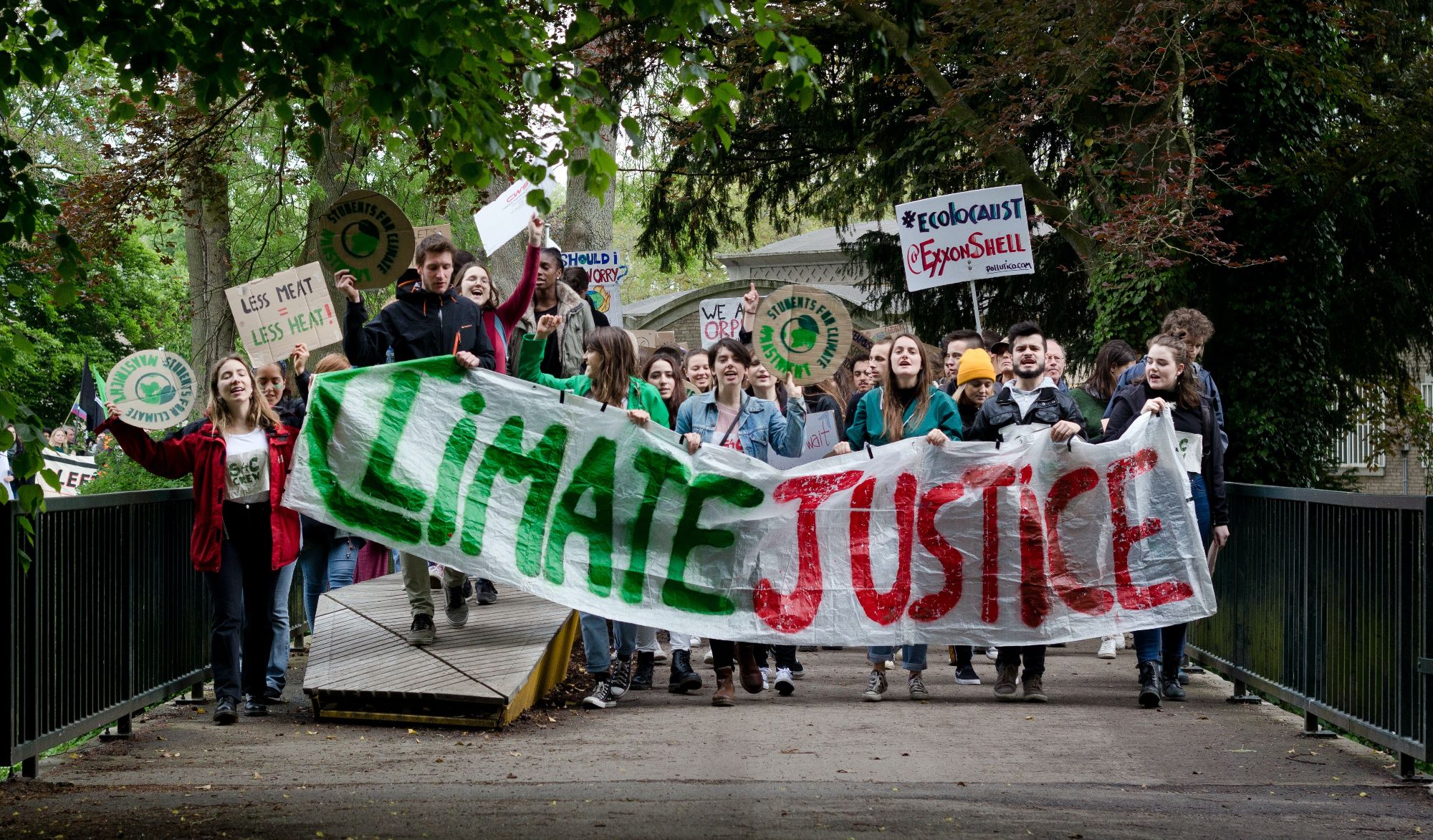
And Christians continue to be active in peaceful protest right up to the present day. Just last month, Christians played a major role in The Big One climate protests outside Westminster. Rev Dr Cate Williams, from the Anglican Diocese of Gloucester, who attended the recent protests said, “‘The Big One’ felt like a very positive space, rooted more in love and hope, as is good and right. We need to campaign as there is no question that we need Westminster to pay attention and make robust policies that take the climate and nature crises seriously. To do so rooted in love and hope, with a feeling of positivity throughout, was fabulous.” [2]
Not only is such a tradition a deeply Biblical one, it has also been proved time after time to be highly effective. In recent decades peaceful reform movements have had dramatic success in Serbia, Madagascar, Georgia, Ukraine, Lebanon, Nepal, Estonia, Latvia, Lithuania, Poland, East Germany, Slovenia, Mali, Bolivia, the Philippines, Zambia, South Korea, Chile, Argentina, Haiti, Brazil, Uruguay, Malawi, Thailand, Bulgaria, Hungary, Nigeria, and many other countries. Of course such movements often require great courage and perseverance from those involved. They are not guaranteed to succeed every time. But overwhelmingly the power of ordinary people peacefully protesting is remarkable, and has continually proved the most successful way to improve democracy, human rights and good governance in nations around the world (Arise Manifesto, pg 86 – 88, 100, 108 – 109).
Supporting such bottom-up Reform Movements protesting peacefully for freedom and human rights in countries all over the globe (and the Christians that are so often at the heart of them) is one of three key focus campaigns for Arise. And indeed, another is to protest for action on global climate change through a crucial shift from polluting fossil fuels to clean renewable energy as part of our 4 Shifts Campaign. We should be deeply concerned by all attempts to restrict the basic freedom to protest. The parts of the Public Order Act; Police, Crime, Sentencing and Courts Act; the Lobby Act, and other legislation that restrict the freedom to protest should be repealed. The freedom to protest is deeply Biblical, a strong Christian tradition and has been a phenomenally important driver for improving social justice, eliminating poverty and restoring the environment all around the world.
Find out more
Find out more about how God is at work in the world, and the role we all have to play in that work, in the Arise Manifesto. This report is Arise’s big picture, researched, Biblical, holistic and practical vision for a better world. It looks at what the Bible says, and what we can learn from the best data and the world’s leading experts on the five major areas of evangelism, discipleship, social justice, development and the environment. It then draws these lessons together into a practical road map for the changes we need to see in our world, which the Arise movement campaigns to achieve.
Find out more about why the world needs 4 Shifts to transition to a fair and green global economy in Arise’s 4 Shifts Report.
Found this blog online, or sent it by a friend? Sign up to receive weekly blogs from Arise directly.
[1] Metropolitan Police officers arrested 64 people during King’s coronation day, ITV News, (Mon 8 May 2023), https://www.itv.com/news/2023-05-07/metropolitan-police-arrested-64-people-during-kings-coronation-day
[2] Blog from Christian Climate Action’s ‘The Big One’, Diocese of Gloucester, (24 Apr 2023), https://gloucester.anglican.org/2023/blog-from-christian-climate-actions-the-big-one/