

Monthly Action - March 2026 - Iran War
Take action to stand for peace and democracy as war rages across Iran and the Middle East.
Iran war
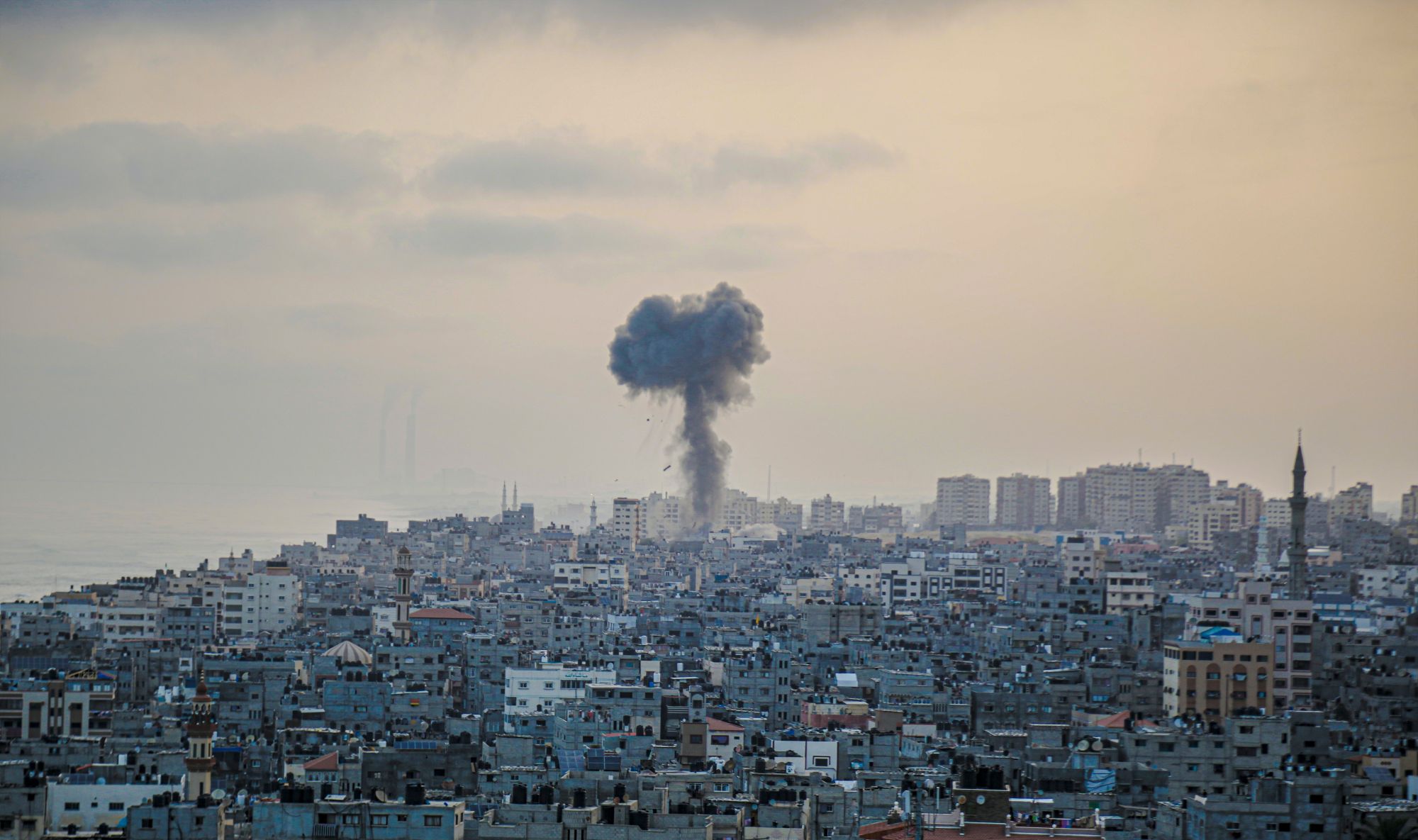
The world has been rocked in the past couple of weeks by US and Israeli missile attacks on Iran which began on Saturday 28 February, and the retaliation that has followed. Hundreds of missiles have been fired at rocket sites and military facilities across Iran. More than 1,300 people have reportedly been killed to date, and over 12,000 have been injured. Iran’s supreme leader Ayatollah Khameni was killed in the first strikes, along with much of the rest of the senior leadership in the country. In retaliation Iran has fired missiles and drones back at Israel and US military sites and civilian targets in US allied countries across the entire Middle East including Bharain, Qatar, Kuwait, Saudi Arabia, the United Arab Emirates, Oman and Jordan. Iran is also shutting down and massively disrupting oil production across the Middle East, causing huge global economic shocks.
The brutal Iranian regime is deeply unpopular with its own people, many of whom have welcomed the strikes. Nevertheless, as in any conflict, it is ordinary people who suffer the most. The BBC reports the story of Sala (not his real name). “Every day feels like a month. The number of explosions, the destruction, what is happening – it’s unbelievable”, he says. Salah’s whole house was shaken by the air strikes which pound Tehran every day. He has had to leave all the windows open to prevent the glass from breaking. Sala’s mother has left Tehran along with many others for safety. “My mother was in very bad shape - she was very frightened”, he says. Many shops are closed and cash machines have run out. Shops that are still open have long queues, and the price of basic food has shot up. Most people are sheltering at home, and the authorities have warned that any mass gatherings on the streets will be severely put down.[1]
Why is this happening?
The hardline Shia Islamic regime that came to power in Iran in the 1979 revolution has long been hostile to the US, Israel and to its majority Sunni Muslim neighbouring states, led by Saudi Arabia. This hostility comes in part from deep seated resentment of decades of US policy interference in Iran, propping up the brutally repressive regime of the shah that proceeded the revolution. It also comes from the founding of the modern state of Israel and the treatment of the Palestinian people. Finally, the hostility towards Iran’s wider neighbours in the region reflects deep seated historical divisions between many Shia and Sunni Muslims that go back centuries to the very earliest days of Islam.
In recent decades this hostility has led to multiple Iranian backed extremist attacks on the US and Israel and the support of disruptive extremist groups across the region, such as Hezbollah in Lebanon, Hamas in Palestine, the Houthis in Yemen, and Shia militias in Iraq and Syria. For years the regime has been well on the way to developing nuclear weapons, something that makes many distinctly nervous about such power in the hands of such an aggressive and unstable nation. At home too, the government in Iran has been as, if not far more, brutal to its own people than the regime it overthrew. The Iranian authorities have killed around 20 – 25,000 of their own citizens in unlawful repression, and imprisoned, tortured and abused tens of thousands more.
All of this has now led to the US and Israel launching a unilateral attack, which is deeply controversial, and highly questionable in international (and even US) law. Israel has also begun intensely bombarding Lebanon in an effort to target Hezbollah. The US has called on the Iranian people to rise up. However, it has also been notoriously vague about what it is actually trying to achieve: a change in regime, the toppling of a leader to be replaced by a more compliant figure, preventing the development of nuclear weapons, stopping the regime from backing extremist groups abroad, or just massively degrading Iran’s military capacity? Apart from the immense human suffering that is the result of any war, the situation is fraught with instability and the risk of the conflict spiralling in unpredictable and highly dangerous ways.
How should Christians respond?
So for us as Christians, what might God be saying, and how should we respond in this terrible and worrying situation? The Bible teaches us that God wants to see an end to conflicts and for peace to prevail, as it says in the book of Isaiah “He will judge between the nations and will settle disputes for many peoples. They will beat their swords into plowshares and their spears into pruning hooks. Nation will not take up sword against nation, nor will they train for war anymore” (Isa 2: 4). It also tells us that he wants all governments to rule with justice and freedom, and treat the citizens of their nation well, for we read in Deuteronomy “Appoint judges and officials for each of your tribes in every town the LORD your God is giving you, and they shall judge the people fairly. Do not pervert justice or show partiality. Do not accept a bribe, for a bribe blinds the eyes of the wise and twists the words of the innocent. Follow justice and justice alone, so that you may live and possess the land the LORD your God is giving you” (Deut 16: 18 – 20). Based on these fundamental Biblical principles, and drawing on other lessons from history (both of which are unpacked in greater detail in the Arise Manifesto: Arise’s Biblical vision for a better world), we can deduce that in this current situation, as Christians we should pray and act for …
- An immediate end to the conflict and a negotiated peace (Arise Manifesto, pg 88 – 90).
- Extreme diplomatic and other pressure on the Iranian regime to end all nuclear energy production, support for extremist factions abroad, and reform to become more democratic and treat its people well (Arise Manifesto, pg 119 – 124).
- Support for brave activists and reform movements among the Iranian people who are working to peacefully overturn the regime and install a democratic government that respects human rights (Arise Manifesto, pg 108 – 119).
- Work towards gradually and safely de-escalating and eventually decommissioning all nuclear and other weapons of mass destruction in other nations too (Arise Manifesto, pg 125 – 126).
In the short-term of course it’s hard to see how these objectives might be achieved. But over time, history shows, in time, on every occasion, wars end through negotiations and unjust regimes are toppled by peaceful popular uprisings. The Lord and history are on our side. For now we need to stand in perseverance, like the prophets, and keep calling out for peace and justice.
Take action
Pray
Pray for an end to the conflict in Iran and across the Middle East. Pray for a dramatic reform and change in the government in Iran, to install proper democracy, respect human rights and freedoms, stop supporting extremist groups across the region and stop the development of nuclear weapons. Pray for the gradual and safe de-escalating and eventually decommissioning of all nuclear and other weapons of mass destruction in other nations too.
Act
Take to social media as part of Arise’s Reform Movements campaign and call for …
- An immediate end to the conflict and a negotiated peace.
- Extreme diplomatic and other pressure on the Iranian regime to end all nuclear energy production, support for extremist factions abroad, and reform to become more democratic and treat its people well.
- Support for brave activists and reform movements among the Iranian people who are working to peacefully overturn the regime and install a democratic government that respects human rights.
- Work towards gradually and safely de-escalating and eventually decommissioning all nuclear and other weapons of mass destruction in other nations too.
Governments in the US, UK and other countries are extremely sensitive to public opinion and how international events are received back home by the voters. The more voices raised in public forums like social media, the stronger the pressure for the right action becomes.
Give
Give to Christian organisations like Embrace the Middle East, Cafod, Christian Aid, Tearfund or World Vision who are all doing essential work supporting communities affected by conflict across the region.
Find out more
Sign up – Found this action online, or sent it by a friend? Sign up to receive monthly actions from Arise directly.
Join a local Arise group in your church or area – It’s great to take this action as individual Christians, but even better to come together with others to pray, discuss, worship, learn, have fun and take action together. Contact Arise if you are interested.
Latest news – Updates on previous campaigns and latest news from the Arise movement.
Arise Manifesto – Find out more about this month’s action in the Arise Manifesto, Arise’s big picture, researched, Biblical, holistic and practical vision for a better world.
[1] ‘Every day feels like a month’: Iranians describe life under US-Israeli strikes, (BBC, 4 Mar 2026), https://www.bbc.co.uk/news/articles/cj4zze5lzjpo