

Weekly Blog - 27 January 2024 - International Day of Education
International Day of Education
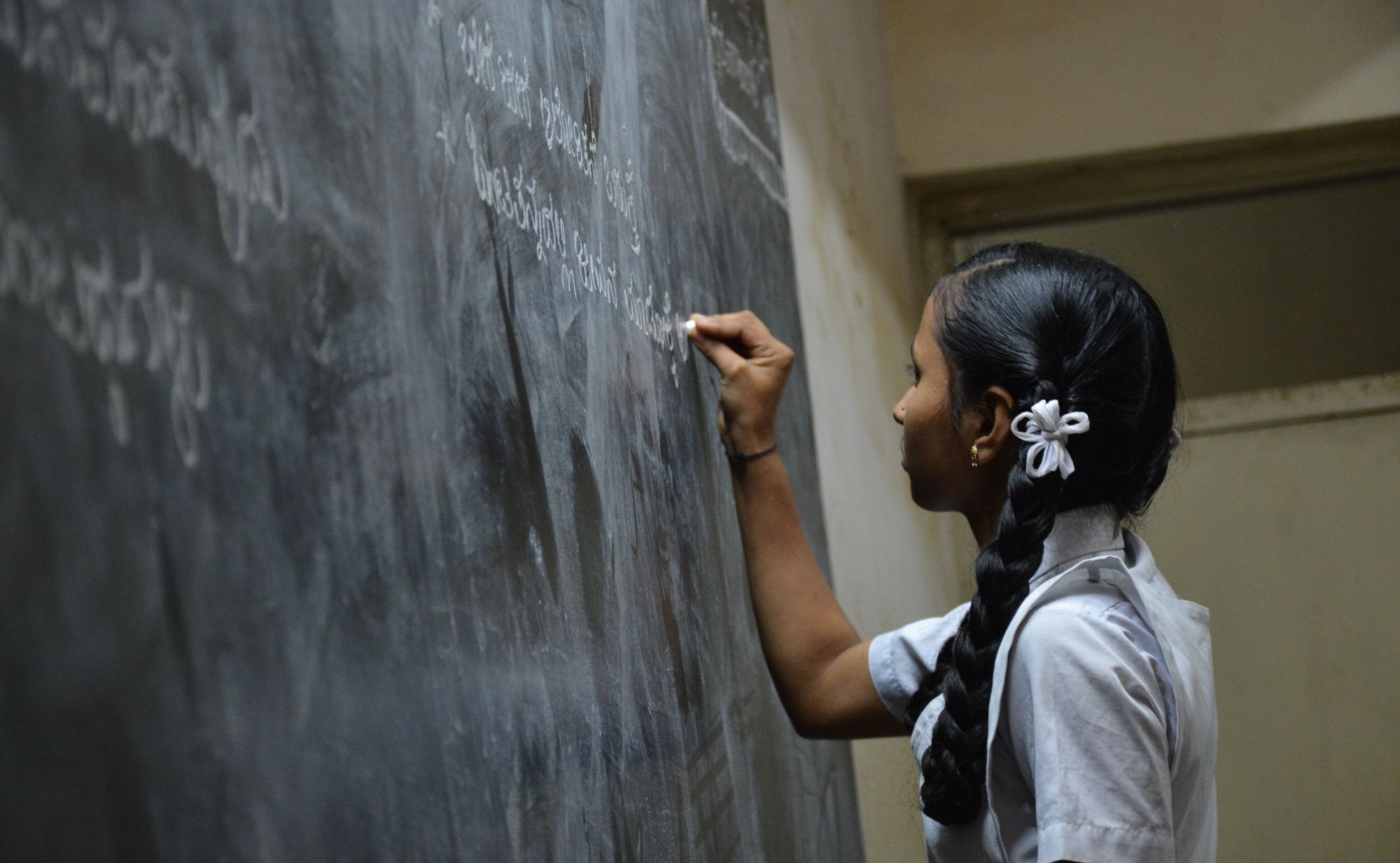
This week the world celebrated the International Day of Education on Wednesday 24 January, when the international community focuses attention on the crucial need to achieve universal access to good education for all children around the world. Around 244 million children are currently not attending school across the globe. Over 617 million cannot read and do basic maths. In Sub-Saharan Africa less than 40% of girls complete secondary school. The theme for this year’s International Day of Education is ‘Learning for Lasting Peace’. It stresses how important good education is for fostering tolerance, understanding, respect for different groups and cultures, and the importance of human rights and democracy.[1] This is a helpful focus, in a time of multiple and growing conflicts around the world, including Ukraine, Gaza, with Houthi rebels in Yemen, and with growing tensions around Taiwan.
In the face of so much poverty and opposition, families around the world are doing their best to try and provide what education they can for their children. UNESCO tells the story of one example, a free school beneath two of the pillars of the aerial motorway that runs through New Delhi, India. The school is for the slum children that live near the Yamuna River. Around 200 children attend, from the first year of primary to the third year of secondary school. The grey blocks of the motorway pillars have been painted with bright colours and scenes of the sky, trees and flowers. The four voluntary teachers have to shout to make themselves heard above the noise of the motorway above. The school was founded by Rajesh Kumar Sharma, himself from an underprivileged family of 9 children in Uttar Pradesh with limited schooling. “The school was seven kilometres from my home,” Ramesh says. “It took me over an hour to cycle there. When I was in high school, I always missed chemistry, which was the first class. As a result, I didn’t get good marks in this subject, and couldn’t go on to study engineering, which was my dream.” Ramesh managed to get to university, but after a year he had to drop out because his family could no longer afford it. He moved to New Delhi with one of his brothers, and worked simple low paid jobs in construction and other industries to earn money. He became increasingly concerned seeing the children of his fellow workers running around out of school, and one day in 2006 started helping two of them with their homework. Others joined too, until in 2010 he opened his free school.[2]
4 Shifts to end extreme poverty
Millions of people like Ramesh make heroic efforts all around the world to help children get the proper education they deserve. However, they are the first to point out that their efforts alone, can never help all. To truly ensure every child everywhere has access to a good school and a good education, the world must address and end the underlying problem of extreme poverty which drives this lack of education. Ultimately that is something that only governments can do. As Christians we know that such heart-breaking extreme poverty is never what God wants to see. As the Bible says, “Whoever oppresses the poor shows contempt for their Maker, but whoever is kind to the needy honours God” (Prov 14: 31). But what actions can the world most effectively take to end the extreme poverty that leads to lack of access to school and an education for so many millions of children?
Arise’s 4 Shifts Report and Campaign looks at what the Bible tells us, and all the lessons from history indicate, works best to reduce and end extreme poverty, including what works best to drive down the numbers of children that don’t attend school. It finds that two key shifts are essential. 1) Nations need to develop strong and fair national economies to create jobs and wealth. 2) They can then tax these to provide social spending and basic services like healthcare, social protection (pensions, low-income support etc.) and crucially education, to ensure all benefit, not just the richest in society. All nations that have developed successfully have followed this route, and the international community should do all it can to support other nations to take the same approach.
Supporting developing country governments as they pursue these policies and approaches, and campaigning for developed country governments to support them through aid, technical support, favourable trade and international policy conditions, and in multiple other ways, is the most effective way to reduce and end extreme poverty and provide access to a good school and a good education for every child in the world. Let’s celebrate the International Day of Education this year by redoubling our efforts to work for change.
Find out more
Sign up to get involved in campaigning for 4 Shifts for a green and fair global economy, and receive weekly actions from Arise.
Find out more about why the world needs 4 Shifts to transition to a fair and green global economy in Arise’s 4 Shifts Report, and how this forms part of God’s bigger vision for our world in the Arise Manifesto.
Found this blog online, or sent it by a friend? Sign up to receive weekly blogs from Arise directly.
[1] International Day of Education 24 January, UN, https://www.un.org/en/observances/education-day
[2] The school under a bridge in New Delhi, UNESCO, (28 Jun 2023), https://courier.unesco.org/en/articles/school-under-bridge-new-delhi