

Weekly Blog - 28 August 2025 - The Good and Bad from Labour so far
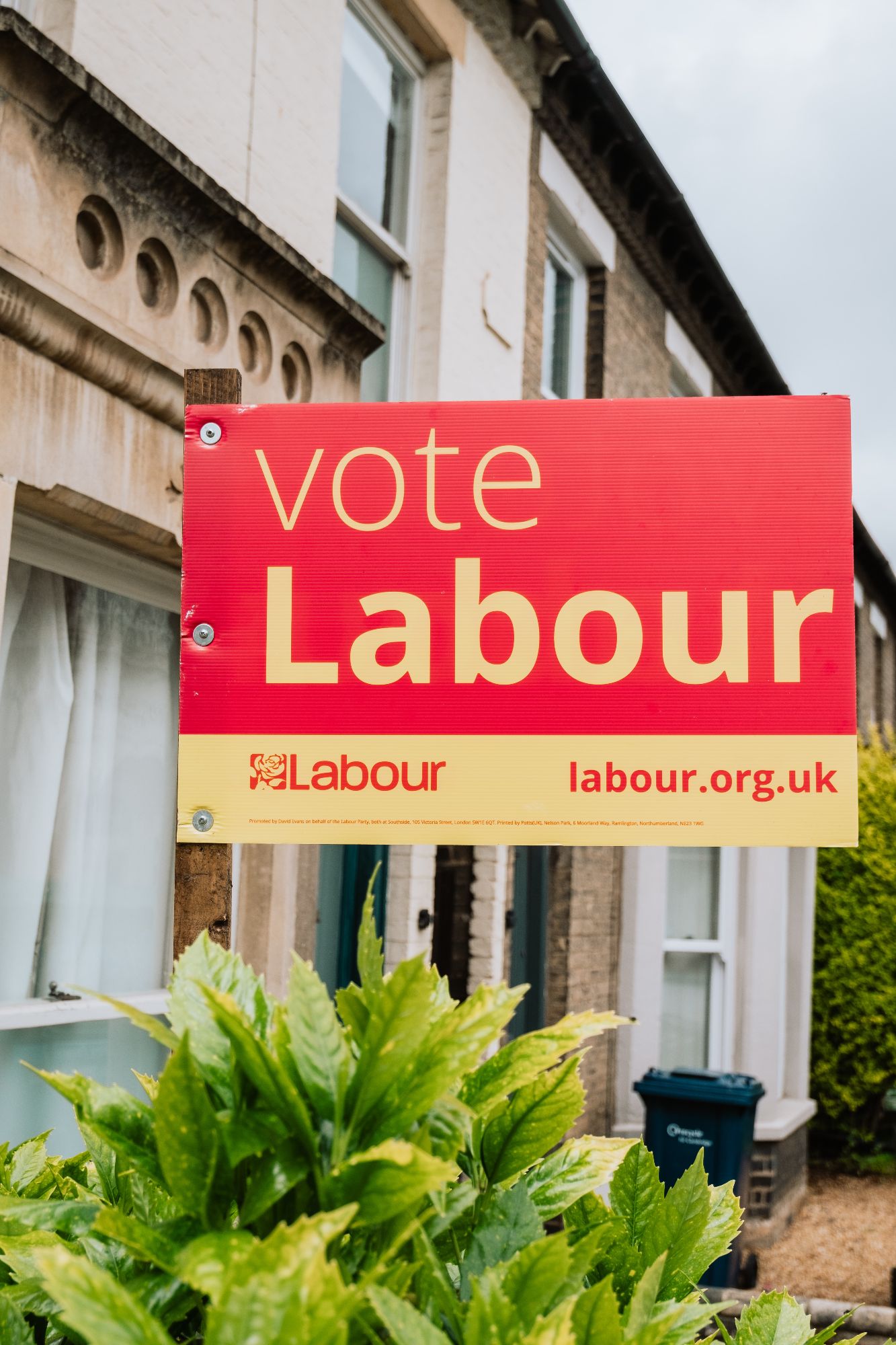
Last summer Labour took power with a huge majority in Parliament and a mandate for change. This summer the opinion polls are very different with Labour’s lead gone. Ben Niblett takes a look at 3 of the top changes for good and bad that we’ve seen from Keir Starmer’s government in the last year.
+1 Net zero
This is one of Labour’s 5 missions. They’ve put their scarce money where their mouth is, increasing the Department of Energy and Net Zero’s budget when most other government departments had cuts. The minister in charge, Ed Miliband, had the same job in the last Labour government and has thought deeply about it, and it shows.
Finishing the job of decarbonising UK electricity is a good aim - we’ve made good progress in the last 20 years, replacing coal with gas, wind and solar, and using less electricity. Now it’s time to stop using the gas too. The target is almost completely clean electricity by 2030, which is ambitious, but possible. Getting there means building wind and solar much faster than before, which has a good chance of happening. It needs investment in the grid to take more electricity from windy and sunny places to homes and organisations elsewhere; this is happening. It needs investment in storage to generate power when it’s sunny and use it that evening, or on a windy day to use on a still one; this is starting to happen. Looking ahead, Labour are building a new full-size nuclear reactor and some experimental small ones, which will be useful in the 2040s.
Transport is the biggest part of our carbon footprint, and Labour have kept the ZEV mandate rules fining car makers if they don’t sell more electric cars each year, which is working well to push prices down and sales up. They’ve sped up the growth in the charging network for all these new cars. And they’ve just introduced a subsidy of £3,750 (more if it’s wheelchair accessible) off the price of a new electric car under £40,000.
+2 Bigger minimum wage
The government raised the minimum wage by more than inflation – 6.7% to £12.21 an hour for the main rate. Working if you can and paying workers fairly are both very biblical, as we explore in Part 5 of the Arise Manifesto. Increasing the minimum wage by more than inflation is a very good way to cut poverty and inequality, though of course it only works for households where someone has a job. It makes sense to put it up steadily not suddenly, in case it makes employers decide to cut staff; so we hope to see the rate rise by more than inflation each year of this government.
The youth rates went up faster, 16% to £10 an hour for 18-20 year olds and 18% to £7.55 for 16 and 17 year olds. It’s good to be reducing the age gap.
+3 NHS
The government are increasing NHS funding, another of their 5 missions, which is very good news. June’s spending review set out government plans till 2029, with a bigger increase for the NHS than anything else. It needs it after many years of budget increases that didn’t keep up with inflation, or with rising demand from our ageing population - it’s good that we’re living longer, and that medical technology is advancing, but neither are cheap.
Labour have published a new 10 year plan, ‘shifting care into the community, shifting from analogue to digital, and shifting from treating sickness to prevention’ as the Kings Fund thinktank put it. These are all wise and much needed, but we don’t have much detail yet on how they’ll get there, though reforming the social care system is off the table for now. In many areas GP and mental health services are not meeting demand, and prioritising investment in them ahead of hospitals will be tough to stick to – as previous NHS plans have found.
-1 Gaza
Since the horror of Hamas’s October 2023 attack on Israel, the Israeli government’s revenge has been brutal, with even their closest allies saying it has gone well beyond any proportionate response. Nearly 60,000 people have been killed in Gaza, 90% of Gazan homes have been damaged or destroyed, aid workers have been targeted, clinics and hospitals have been attacked, and food is running out. Embrace the Middle East had this update from their partner Caritas Jerusalem recently: “Our colleagues in Gaza are no different from the rest of the civilian population. They are being starved under siege conditions, surviving on little more than salt, water, and tea.”
Faced with these war crimes – potentially genocide – Labour have done more than nothing but less than they could. Britain sells a variety of arms to Israel; unlike the previous government, Labour have ended 30 export licenses out of the total of 350. Britain continues to provide a range of arms and equipment to the Israeli Defence Force. Britain isn’t one of Israel’s top arms providers, but even so, revoking the arms licenses would have a diplomatic impact, and helping equip possible genocide is just wrong. Labour resumed funding the UN aid programme in Gaza, but Israel recently stopped it operating. Labour has recently called on Israel to allow food and medicines into Gaza, and pledged to recognise Palestine as a state, which is a strong diplomatic message, and was in their election manifesto. Britain doesn’t have very much leverage over Israel, but it’s hard to understand why Labour have been so slow and so timid about using what there is.
-2 Aid
Cutting the aid budget was an unexpected disaster. Labour’s manifesto promised to increase aid again after the Johnson government’s cuts, back to the target of 0.7% of national income – though it was vague about timing, saying only when the economy allowed. But instead they’ve cut the aid budget to just 0.3% of national income, to help pay for increasing defence spending. Several European countries have done the same, all realising that the USA is a much less reliable ally and worrying about Russia. As we said, spending more on defence is a good idea, but paying for it by cutting aid is immoral. Nor will it provide enough money.
This government will cut aid more than any UK government ever has before. The cuts to the Gavi global vaccine alliance alone will deprive 23 million children of immunisations and cost around 400,000 lives. It’s the opposite of the apostles’ instruction to Paul when he went out to preach the gospel that he “should continue to remember the poor, the very thing I had been eager to do all along” (Gal 2: 10).
-3 Confusion over disability benefit and winter fuel payments
Labour started by saying the previous government left a budget overspend of £22 billion, and to meet that they scrapped the winter fuel payment, the Stonehenge road tunnel, a fund for reopening railway lines, the Rwanda deportation scheme and a few other things. Ending the winter fuel payment for around 9 million pensioners, so just the 1.5 million claiming pension credit would get it, was a surprise and caused a lot of opposition. Labour have reversed it except for the 2 million or so wealthiest. It’s not really that much money at £200 or £300 a year per household for pensioners, and £1.5 billion a year that the government would have saved.
Looking for savings to allow spending elsewhere, Labour planned to cut the large and growing disability benefits bill. This caused a lot more opposition and a revolt by Labour backbench MPs. One of the leaders was the Christian MP Rachael Maskell, who said ‘Taking someone’s independence does not make them better, more able to work or keep people in work. It creates poverty, dependency and places more pressure on social care and the NHS. I draw on the substantial evidence, the voices of those impacted and my conscience which determines that I cannot cross by on the other side.’ The government were forced to abandon plans to cut PIP payments to people with disabilities, and carer benefits; they still plan to cut disability benefits for people making a new claim from April next year – Carers UK have a good summary. It’s left a sour taste for people expecting the government to make life better for vulnerable people. The biblical principle of providing welfare support through taxation that helps all in need in society, and also how welfare systems can be continually adjusted and reformed to make them as effective as possible is explored in greater detail in the Arise Manifesto (Arise Manifesto, pg 147 – 150, pg 195 – 204).
Time for different kinds of tax?
Labour have seven big money problems. First, they took over an economy not in great shape after the 2008 crash, Brexit and Covid, just before the world economy became less stable with Trump in the White House. Second, bailing out the banks in 2008, the pandemic, and helping people with energy bills when gas prices spiked after Putin attacked Ukraine mean more debt and higher interest payments. Third, they need to keep the markets happy or the cost of borrowing rises, as Liz Truss found out, so they need to show they’re being responsible – but reversing decisions on cuts weakens their credibility. Fourth, there’s pressure to spend more on defence. Fifth, they promised in the election not to raise the main taxes. Sixth, voters expect more change than they’re seeing yet and delivering faster means spending more (mostly). Seventh, they’ve set themselves overly precise spending rules based on a government borrowing target in 2029-30, requiring arbitrary spending decisions now to make the estimates for four years’ time add up exactly. Their best option is probably to keep their tax promises and raise other taxes instead to avoid making unfair and painful cuts, raise aid again, and accelerate the change they were elected to deliver, and perhaps change their fiscal rules (slowly and carefully in conversation with the markets).
But which taxes should they raise? Air Passenger Duty looks good to raise funds and cut emissions. Fuel duty too, but with a political cost after not rising for many years. A wealth tax is a great principle but needs careful design (what tax doesn’t?). The Arise Manifesto explores these and many opportunities for innovative taxes that don’t impact ordinary people and are based on biblical principles (Arise Manifesto, pg 147 – 150, pg 195 – 204). And a recent blog from Arise explores many other policies that don’t cost, and indeed can save money and raise income for governments. Play the Institute for Fiscal Studies’ Be the Chancellor game and explore how tricky Rachel Reeves’ job is. Then pray for wisdom, compassion and imagination for her and everyone in government.
Find out more
Arise Manifesto – Find out more about policies that could help the Chancellor’s dilemma in the Arise Manifesto, Arise’s big picture, researched, Biblical, holistic and practical vision for a better world.
Take action – It’s important to read about and better understand these issues. Very important too is not just reading but taking action. Sign up to receive monthly actions from Arise that you can take by yourself, or better still with others in a local church group near you.
Latest news – Latest news from the Arise movement.
Sign up – Found this blog online, or sent it by a friend? Sign up to receive weekly blogs from Arise directly.