

Weekly Blog - 8 February 2026 - Official Development Assistance
As we come up to the first anniversary of the UK making major cuts to its overseas aid budget, Catherine Masterman, Christian and former UK official on development policy, offers some thoughts based on the Biblical principles of Solidarity, Stewardship and Trust.
ODA
In our Arise blog last August which reviewed the first year of the current Labour government, we flagged the ‘unexpected disaster’ of the aid cuts. Later this month is the anniversary of the Prime Ministers’ announcement, in the wake of the US abolition of its own aid programme, to cut the aid budget termed Official Development Assistance, or ODA to 0.3% of national income, in contrast to the manifesto promise (albeit with vague timing) to increase to 0.7%. As a reminder of the impact this will have, these cuts reduce aid more than any UK government ever has before. Cuts to the Gavi global vaccine alliance alone will deprive 23 million children of immunisations and cost around 400,000 lives. As we said in August, it’s the opposite of the apostles’ instruction to Paul when he went out to preach the gospel that he “should continue to remember the poor, the very thing I had been eager to do all along” (Gal 2: 10).
The UK church has long had a strong role to play in advocacy on UK ODA and faith groups have had a continually evolving role in development programming. In the wake of the US announcement last year to dramatically cut its ODA programme, the question of Biblical teaching relevant to ODA was given unexpected prominence in debates between JD. Vance and Rory Stewart on X. As we experience shifts in the domestic political debate as well as major disruption to systems for international collaboration, it’s important to reflect again on what the Bible has to say that’s relevant to whether ODA is a good use of public money.
ODA is a symbolic and real commitment to the principle that people are not defined by their circumstances
All people are defined first in relation to God and created in his image (Genesis 1:27). This overarching Christian principle gives everyone innate value, regardless of treatment by political authority and regardless of their belief. This religious idea has been considered a foundation for the principles underpinning the ideas of human rights. ODA financed programmes, such as countering violence against women and girls, or primary health care and education in conflict affected communities, make a statement that people should not be defined by the way they are treated or by their circumstances. A healthy democracy needs policies that deliberately reinforce the principle that all people have the same innate value – it’s an important counterweight to privileging certain groups over others.
Human solidarity is relational – people flourish or fail together. God’s commandments matter for collective groups as much as for individuals. Both Old and New Testament covenants envisage a model of flourishing in community – but both are working towards the ultimate vision of a world where all people flourish together. Disciples are called to live prophetically, working alongside Christ for the renewal of all things and to share the heart of God for the poor and oppressed. This goes beyond inter-personal interactions. Collective flourishing across larger communities depends on laws and structures that govern the use of power and collective resources, such as ODA.
Stewardship of power for the benefit of all
The servant leadership of Christ – the use of his power for the benefit of all – is what creates the foundations for the vibrant, life giving and dynamic vision of the restored future. In Isaiah 2 it is described as “the mountain of the Lord” where people would “walk in his paths”, including for social and economic relationships, as described in the Mosaic law. Whilst the context may have changed since Biblical times, the core drivers of human behaviour remain. In particular, the universal human tendency to hoard the benefits of power and wealth (described in the Old Testament as ‘coveting’). Coveting leads to exploitation of people and over-exploitation of the natural world. As Pope Francis explained, the social and environmental crises are interdependent. Three principles in the law for preventing coveting are particularly relevant to the role of ODA.
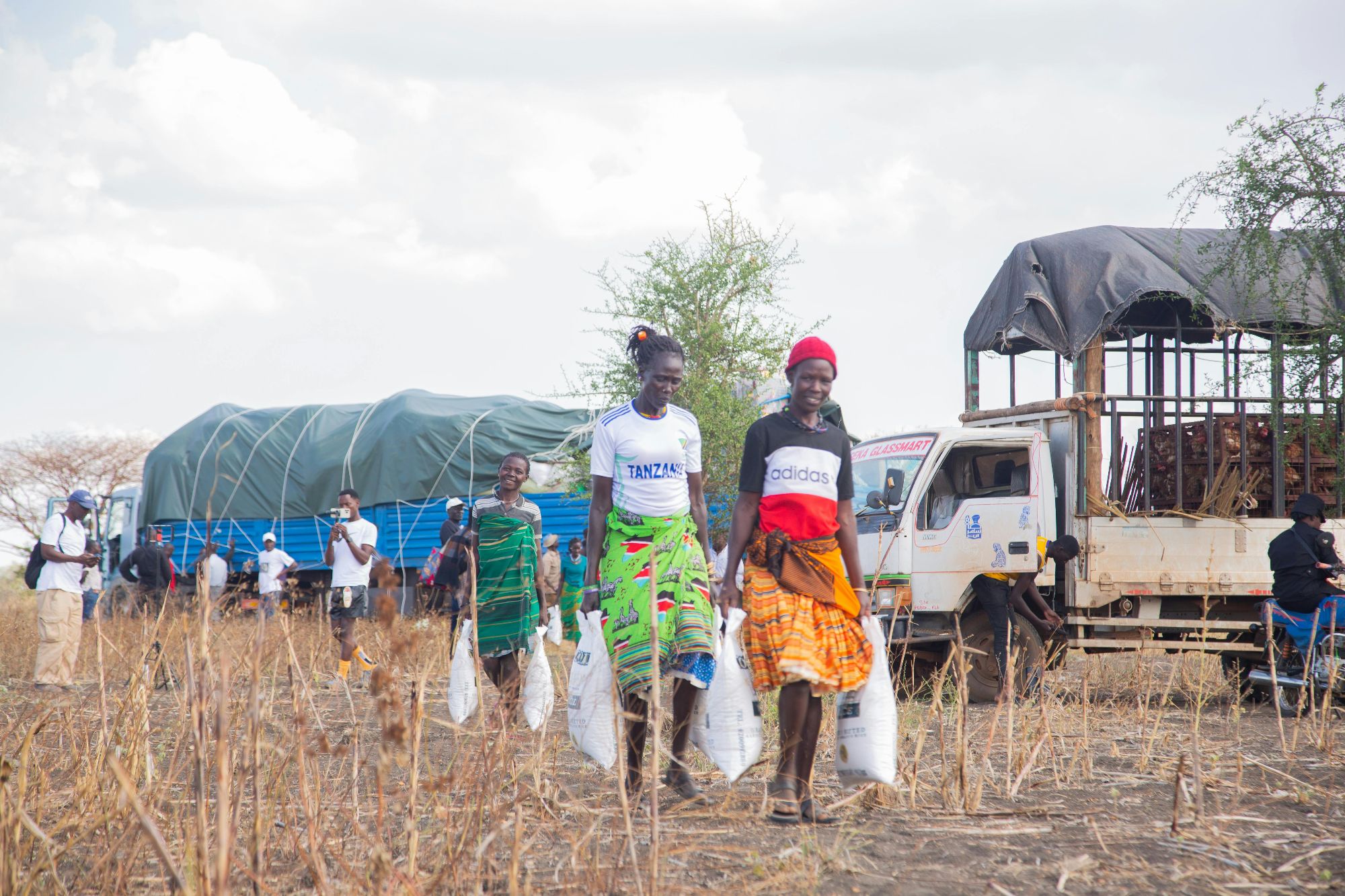
- Gleaning – enabling opportunity by asking those with assets to forego exploitation to the full of those assets in order that the poor may make a living (Lev 23: 22). ODA embodies this principle. Developed country governments forego spending a very small % of their income on themselves (0.3% of Gross National Income in the UK now) in order to support developing countries with crucial education, healthcare, job creation and other programmes. As the Arise Manifesto highlights, gleaning is also highly relevant to the use of natural resources and particularly carbon emissions.
- Fairness in transactions – fair treatment and fair terms for credit and employment run through Old and New Testament teachings. “Look, the wages you withheld from the workmen who mowed your fields are crying out against you” (James 5:4). UK ODA has consistently supported improved terms for industrial and agricultural workers and taken action against modern slavery.
- 'Jubilee’ – a periodic ‘reset’ to avoid entrenched poverty. As a central narrative for debt cancellation in the 2000s, the idea of Jubilee is again being used in relation to high indebtedness, but there is also a much broader concept of jubilee – a reset of mainstream economic and financial structures leading to widening inequality and ecological degradation in all countries. ODA is part of setting right and offsetting some of the economic injustices built into global financial architecture. Although it is only a part, many other policies are also needed to tackle economic injustice as set out in the Arise Manifesto.
Relationships based on Trust
ODA is often seen as zero sum – either benefitting the UK or only benefitting other countries. Neither framing reflects its potential for the health of a two-way relationship between countries. Trust, which is the foundation of any relationship, is built when ‘gifts are used for the common good’. High-handed treatment (such as poorly managed programme closures) damages partnership. Whilst ‘trust’ might seem ephemeral, it can have real world impact and the trust between the poorer and richer countries has taken a big hit through the experience of COVID and the subsequent ODA cuts. ODA can be used for focusing mutual attention on issues of shared concern – whether the wellbeing of vulnerable groups or addressing a joint problem such as transnational criminality. Seeking ‘trust’ does not mean naivety nor careless financial management, after all Christ cautioned his followers to be “wise as serpents, innocent as doves” (Matthew 10: 16).
Conclusion
Allocating public resources for international co-operation will always be a matter of principle. It is unlikely that many rich countries will ever consider they can ‘afford to be generous’. ODA reports reveal impressive numbers of lives enhanced, but statistics become irrelevant if the core purpose of ODA is disputed. These three Biblical principles can offer a different way of thinking about ODA. Upholding the innate worth of the vulnerable can reinforce a core democratic principle; stewardship of power for the benefit of all offers a rich narrative for change, and building trust in international relationships can help all parties.
Find out more
Arise Manifesto – Find out more about how ODA embodies core Biblical principles in the Arise Manifesto, Arise’s big picture, researched, Biblical, holistic and practical vision for a better world.
Take action – It’s important to read about and better understand these issues. Very important too is not just reading but taking action. Sign up to receive monthly actions from Arise that you can take by yourself, or better still with others in a local church group near you.
Latest news – Latest news from the Arise movement.
Sign up – Found this blog online, or sent it by a friend? Sign up to receive weekly blogs from Arise directly.